


AI agent engineering
Function-calling agents with bounded autonomy, retry logic and explicit state tracking — built to run, not just demo.
Industries · AI
Production AI systems built to handle real inference load, not demo traffic. Agents, RAG, eval harnesses — plus the developer marketing and analyst relations that cut through a market full of demos.
Corum8 builds production AI systems — agents, RAG pipelines, fine-tuned models and inference infrastructure — and runs the developer-first marketing, technical content and analyst relations that separate a real launch from the wall of me-too AI announcements. 40+ AI systems in production, serving 200M+ inferences monthly, across teams that need both the engineering and the credibility to be taken seriously.
What's included
Function-calling agents with bounded autonomy, retry logic and explicit state tracking — built to run, not just demo.
Retrieval quality treated as the product, evaluated independently from generation and re-ranked properly.
Golden-dataset evaluation built before the prompt, so quality regressions get caught, not discovered by users.
vLLM, TensorRT and Triton deployments for teams that need self-hosted or sovereign inference.
Positioning and go-to-market built to differentiate a real system from the wall of demo-stage AI announcements.
Documentation and technical marketing that developers actually trust — written by people who understand the stack.
Research-grade writing that builds credibility with a technically literate audience, not marketing fluff.
Positioning and briefing support for category conversations with CB Insights, Gartner and comparable analyst firms.
Is this you?
You don't need all of them. One is usually enough to justify the call.
It works in a demo, but nobody's put it in front of real users because there's no eval harness behind it.
You're one of a hundred AI announcements this month and nothing in your positioning differentiates the real system underneath.
Your technical audience needs credibility signals your current content doesn't provide.
You need analyst relations and framing that puts you in the right comparison set, not a press release nobody reads.
You're paying real money in model costs monthly and nobody can point to which feature drives most of it.
Someone internally wants a verifiable evaluation story before the product goes near real users.
Sectors
The product differs, the discipline doesn't.

Cross-tool agents automating real internal workflows at scale.

Consumer features where AI is now a baseline expectation, not a novelty.
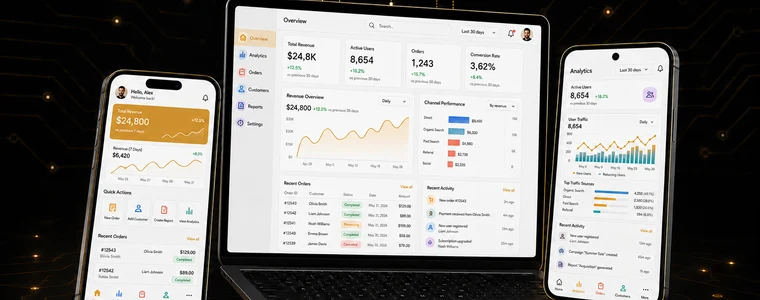
Inference platforms, orchestration tools and AI-native developer products.

Systems that need an evaluation story that satisfies your reviewers, not just users.

Signal extraction and anomaly detection over market and on-chain data.

Agents that read chain state and execute bounded, auditable on-chain actions.

AI integration for operations teams inside procurement-heavy organizations.

Founders defining a new category who need analyst relations from day one.
Process
The golden dataset and the market positioning get scoped in the same conversation — engineering and story, not sequential.
Model routing, retrieval or agent orchestration engineered against the eval set, not a demo script.
Documentation, technical posts and launch coverage built for a technically literate audience that can smell hype.
Category-conversation briefings alongside quarterly model-upgrade and eval reviews — a continuous operation, not a launch event.
Case studies
An enterprise agent platform and a developer-infrastructure launch, each pairing the eval work with the story that got it taken seriously.
An enterprise-ops startup had a working agent prototype but no eval story and no positioning that separated it from a crowded AI-agent category. Building the golden-set evaluation harness alongside category-defining launch messaging and analyst briefings got the platform into serious enterprise-buyer conversations instead of a generic 'AI agent' comparison set.
An AI infrastructure startup needed developer marketing that wouldn't get laughed out of the room by a technically sophisticated audience. Research-grade technical posts and documentation written by people who understood the actual inference stack got organic developer sharing that paid marketing alone couldn't buy.
Why Corum8
The team building the eval harness has shipped production AI since the GPT-3.5 era, not just read about it.
Technical content written by people who understand the stack — credibility a technically literate audience can actually detect.
Positioning and briefing support for CB Insights, Gartner and comparable category-defining conversations.
The eval harness and the launch narrative get built in the same conversation, not handed off after the fact.
10+ years across Web3, fintech and enterprise clients now applying the same discipline to AI products.
We build evaluation stories that hold up under scrutiny, not marketing claims that overreach the technology.
What drives scope
The decisions that shape cost and timeline happen before any model gets called.
Third-party API vs private or on-prem inference — each layer adds engineering and operational overhead.
Vibes-based quality is cheap. A golden-set eval harness with CI/CD for prompts is a system of its own.
A quiet feature launch is one scope. Category-defining positioning with analyst relations is a materially bigger one.
A consumer feature needs less technical credibility than a developer-facing infrastructure product.
Consumer AI is lightest. AI in a high-stakes category needs a defensible evaluation story built to survive legal review.
An internal tool for a small team is a different build and launch from a consumer feature aimed at hundreds of thousands of users.
FAQ
A serious AI agency builds production AI systems — agents, RAG pipelines, evaluation harnesses — and runs the developer-first marketing and analyst relations that separate a real launch from a demo announcement. Most AI marketing suffers because the underlying product isn't production-grade; most AI engineering suffers because nobody built a credible story around it. Corum8 does both under one roof.
Cost is driven by model sovereignty, evaluation rigor, positioning ambition, developer-trust requirements, scrutiny level and scale target. A consumer feature with light evaluation is a different budget than a high-stakes AI system with a defensible eval harness and analyst-relations-grade positioning.
Yes — through category-defining positioning grounded in what your system actually does, not generic AI marketing language. The differentiation usually comes from being specific about real capability and real evaluation results, which most AI marketing avoids because the underlying product can't back it up.
No — we work with AI-native startups, and with fintech, Web3 and enterprise clients adding AI capabilities to an existing product. The engineering and positioning requirements differ by starting point, but the discipline of building the eval story alongside the launch story applies either way.
Model routing and system architecture, evaluation harness design, developer-facing documentation and technical content, launch positioning, and analyst relations support where category conversations matter. Engagements scope to the specific product and audience — a developer-infrastructure launch and an enterprise product sold into legal review carry very different scopes.
By building the evaluation infrastructure and the marketing content together, so every claim in the launch materials traces back to a specific, verifiable result. Institutional buyers and their legal teams spot overclaiming fast, and one unsupportable number costs more trust than three good ones earn. The credible path is specific, defensible measurements against a dataset you can show them — not generic AI marketing language.
Yes — positioning and briefing support for conversations with analyst firms like CB Insights and Gartner is part of the practice for teams trying to establish a new category. This works best when the underlying product genuinely earns the category claim, not as a positioning exercise layered on top of a generic feature.
We scope to the piece that unblocks you soonest, and grow from there. Sometimes that is the evaluation harness, sometimes the launch narrative, sometimes both together because the claims depend on the measurements. If the need is genuinely narrow — one integration, one placement — we will scope it narrow and price it that way. The combined engineering-and-marketing engagement earns its value when the product and its story need to move together, and we will tell you plainly which situation you are in before anything starts.