

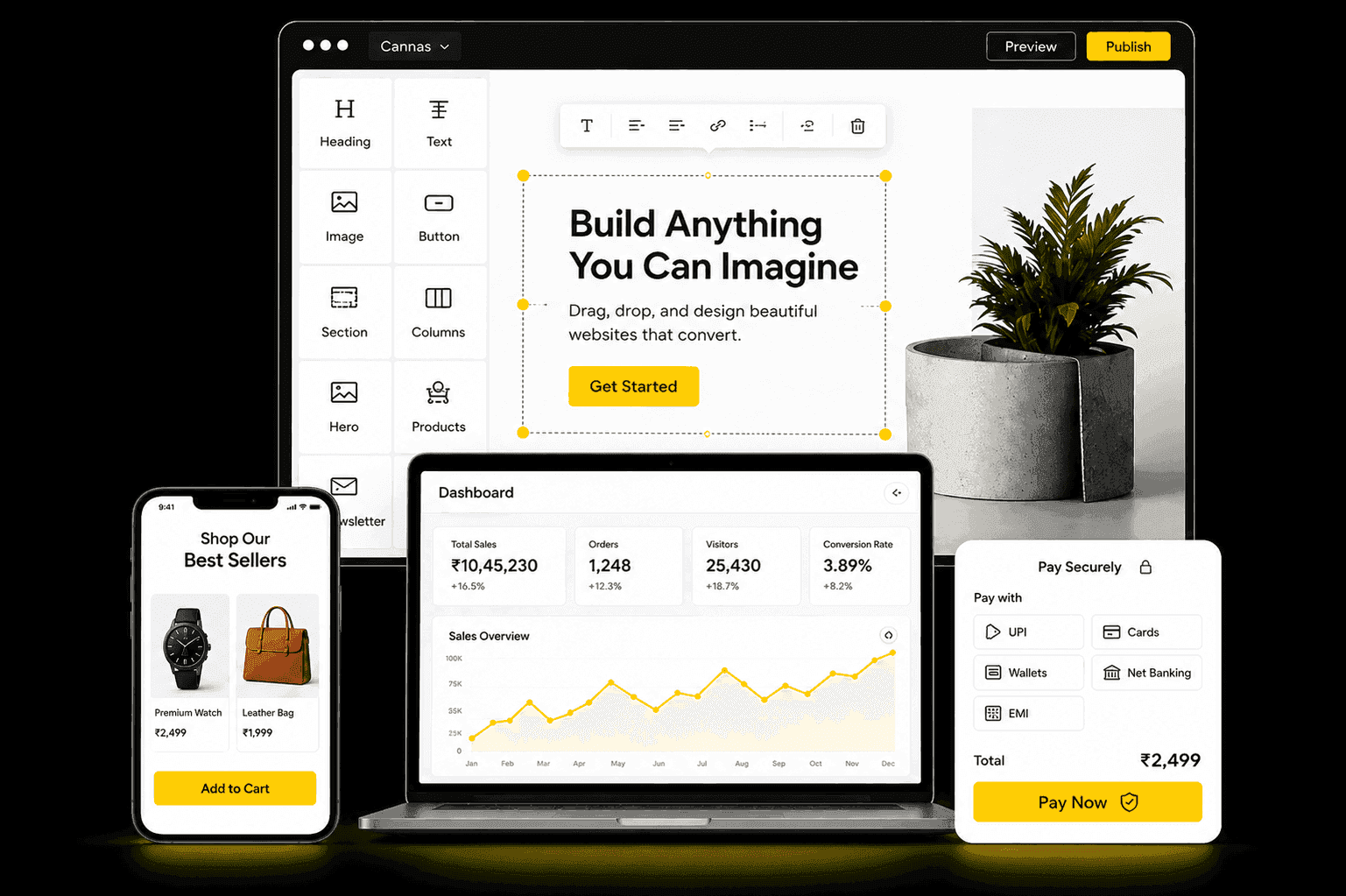
Marketing site design & build
Sites that apply your brand identity consistently across every page, not just the homepage.
Development · Websites
1,100+ projects delivered since 2016. Marketing sites, headless CMS builds and multi-language platforms — engineered for real SEO foundations, not a template with your logo on it.
Corum8 builds marketing and corporate websites — headless CMS platforms, multi-language sites, developer portals and the SEO-technical foundations real organic visibility depends on. 1,100+ projects delivered since 2016, built for content teams who need to update the site without filing an engineering ticket every time.
What's included
Sites that apply your brand identity consistently across every page, not just the homepage.
Reusable, fast-to-ship landing page templates for campaigns your marketing team can launch without engineering.
Content managed independently from presentation, so a redesign doesn't mean rebuilding the content model.
Core Web Vitals and load-time work that shows up in both search rankings and actual conversion rate.
Structured data, crawlability and site architecture built correctly from launch, not patched in later.
True localized content and routing, not a machine-translated layer over an English site.
Editorial workflows your content team can actually use, with preview and approval built in.
Tracking wired to real business events, not just pageviews that don't tell you what's working.
Is this you?
You don't need all of them. One is usually enough to justify the call.
Slow load times are showing up in both search rankings and conversion data.
Every content change requires a developer, which means content updates happen far less often than they should.
Structured data, crawlability and site architecture were never built correctly, and it's capping your organic growth.
You're expanding into markets where a genuinely localized site, not a translated layer, actually matters.
The brand and message have moved on, but the site is still telling the old story.
Your current platform is limiting what the team can build and it's time to move to something modern.
Sectors
The audience differs, the technical foundation doesn't.

Brand-consistent sites built for both conversion and organic search.

Fast, reusable campaign pages marketing can ship without engineering.
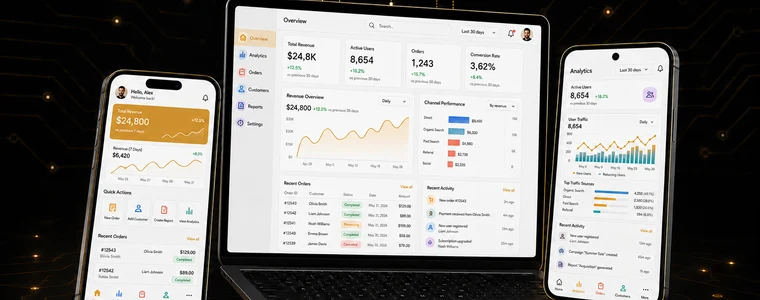
Content platforms decoupled from presentation for long-term flexibility.

True localization across content, routing and regional SEO.

Technical documentation sites built for a developer audience.

Sites engineered from the ground up for organic visibility.

Protocol and token-project sites built for crypto-native and mainstream audiences alike.

Legacy-platform migrations that preserve SEO equity through the transition.
Process
Performance, SEO and content-workflow gaps assessed against what the site actually needs to achieve.
Headless CMS, framework and hosting chosen for the specific content and performance requirements.
Core Web Vitals, structured data and crawlability built in before launch, not patched afterward.
Editorial workflows and documentation handed to your content team so the site keeps evolving after delivery.
Case studies
A Web3 protocol site rebuild and an enterprise legacy CMS migration that protected years of organic search equity.
A Web3 protocol's marketing site was built on a page builder that produced slow load times and weak SEO structure. Rebuilding on a modern framework with proper structured data and crawlable architecture materially improved both Core Web Vitals scores and organic search visibility within two quarters.
An enterprise site needed to migrate off an aging legacy CMS without losing years of accumulated organic search equity. Careful URL mapping, redirect strategy and structured-data preservation through the migration meant search rankings held steady rather than dropping during the platform switch.
Why Corum8
Technical SEO foundations engineered from the first sprint, not audited and patched after launch.
CMS workflows built for how your actual content team works, with preview and approval included.
Core Web Vitals work that improves both search visibility and real conversion rate.
1,100+ projects and 10+ years building sites that stay fast and maintainable after launch.
Legacy platform migrations planned to preserve rankings, not risk them for a redesign.
Multi-language sites built with real regional routing and content workflows, not a widget.
What drives scope
Cost is driven by page count, CMS complexity and integration depth.
A 12-page marketing site is lighter than a 60-page multi-product site with a documentation portal.
A simple headless setup is one scope. Complex editorial workflows with approval chains add real build time.
English-only is lightest. Each additional language and region adds content, routing and SEO work.
'Works and loads fine' is one budget. Top-tier Core Web Vitals scores need dedicated optimization work.
A standalone marketing site is simpler than one integrated with CRM, analytics and marketing automation.
Building on an existing design system is faster than establishing visual identity and components from scratch.
FAQ
Website development here means engineering marketing and corporate websites — headless CMS platforms, multi-language sites, landing page systems and developer portals — with real SEO technical foundations, not just visual design. The discipline centers on making the site fast, crawlable and editable by a content team, not just good-looking on launch day.
Cost is driven by page count and complexity, CMS workflow depth, localization scope, performance target, integration depth and design system reuse. A 12-page marketing site is a different budget than a 60-page multi-product site with a documentation portal and three-language localization.
It depends on the content team's needs — headless CMS platforms like Contentful or Sanity offer more flexibility for complex content models, while traditional platforms can be faster to launch for simpler sites. We recommend based on your actual content workflow and technical requirements, not a default preference.
Yes — migration work includes careful URL mapping, redirect strategy and structured-data preservation specifically designed to protect accumulated search equity through the transition. Rankings dropping during a migration is usually a sign the redirect and structured-data work wasn't done carefully, not an inevitable cost of migrating.
Site architecture and design, CMS setup and content modeling, technical SEO implementation, performance optimization, analytics and conversion tracking, and content-team handoff with documentation. Ongoing content production and paid campaign management sit outside this scope, coordinated with our marketing practice where relevant.
Yes — with genuine localized content, routing and regional SEO rather than a machine-translation layer over a single-language site. Each region gets content workflows local teams can manage independently, on a shared technical foundation.
Yes — documentation and developer portal builds are a specific practice area, with information architecture and integrated code examples built for how developers actually search for and consume technical content. Poor documentation structure is one of the most common causes of avoidable support ticket volume.
Custom earns its place when the site is doing real work — converting, explaining something complex, or carrying a brand people will judge you on. Interactive product surfaces, heavy content architecture, unusual navigation and anything with a design system behind it all benefit. Where you need a clear presence quickly, a well-executed template gets you live and credible in a fraction of the time. Plenty of teams launch on a template and move to custom once the site is genuinely load-bearing. We scope to the stage you are at.