


Work out who you are actually selling to
We build a named list of 100-500 companies worth pursuing, with your sales and product people in the room. Everything after this points at that list rather than at the whole market.
Marketing · B2B
Marketing aimed at the companies you actually want as customers. A named list, content that speaks to them, and LinkedIn outreach run with your sales team — all reported against the deals it opens.
Corum8 runs B2B marketing for SaaS, fintech, crypto infrastructure and enterprise companies. We build a named list of the companies worth winning, produce the content that moves them, run LinkedIn outreach alongside your sales team, and handle events and sales materials. It is built for long deals where a whole committee has to agree, and reported so you can see what each channel actually did.
What's included
We build a named list of 100-500 companies worth pursuing, with your sales and product people in the room. Everything after this points at that list rather than at the whole market.
Category education for awareness, technical comparisons for consideration, business-case material and case studies for decision.
Personalized multi-touch sequences to named individuals — specific to the account and person, never templated.
LinkedIn Ads as the dominant channel, Google for high-intent queries, reported channel by channel.
Industry conferences and executive dinners, with structured follow-up within 48 hours — where most programs actually fail.
Case studies, the business case for buying, and one-pagers on how you compare to each rival — built as part of the marketing programme, not handed over as an afterthought.
Regular reports covering reach, response and cost by campaign, channel and account.
Shared account lists and coordinated outreach — the foundation tactics fail without.
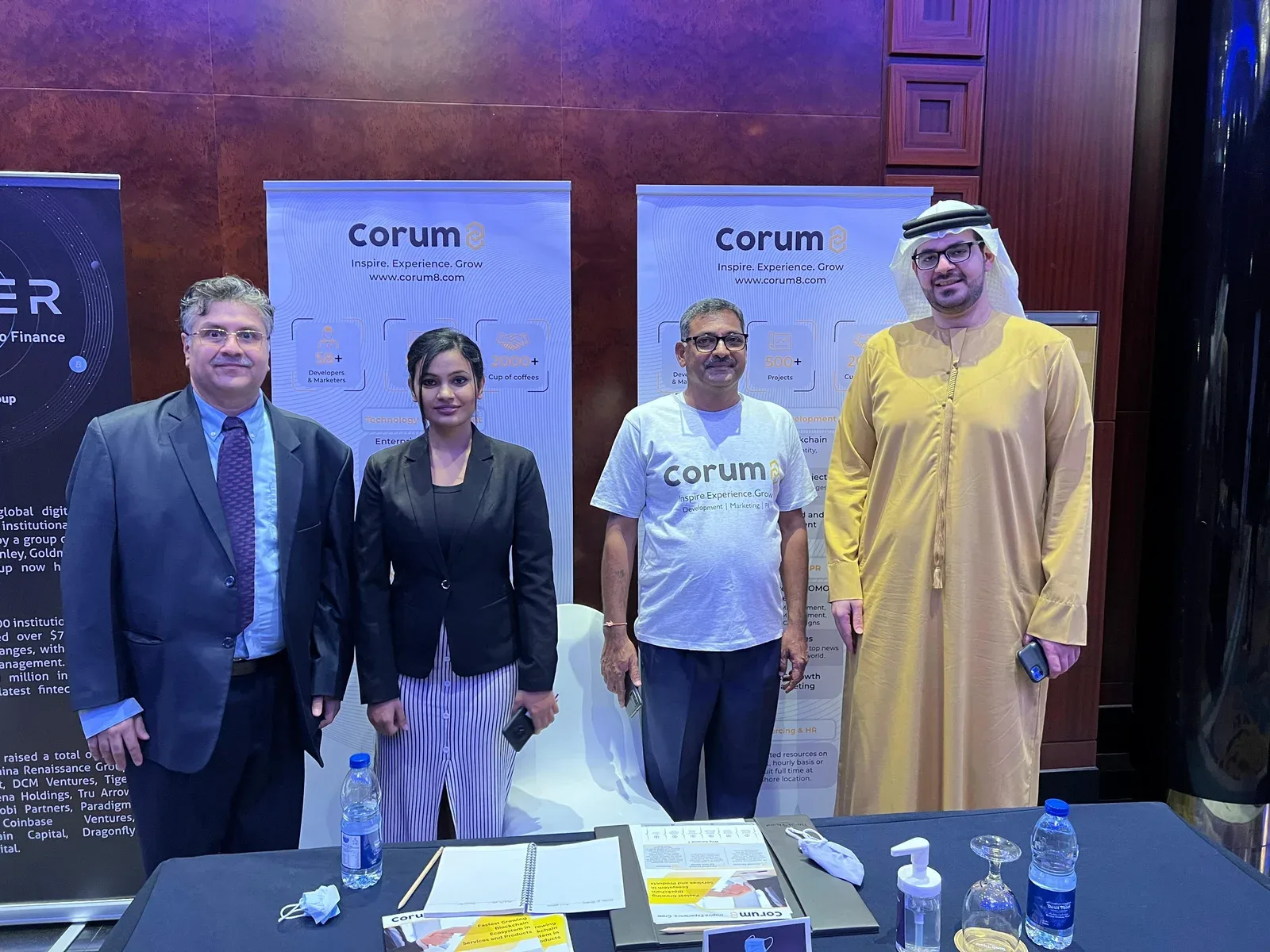
Where the pipeline actually gets built
A booth conversation with the right account moves an enterprise deal a long way in twenty minutes. We treat conference presence as a pipeline channel with its own reporting — booth staffing, on-site meetings and the follow-up sequence are planned against the same account list as the outreach. The accounts that show up at the booth are usually the same accounts sales has already been trying to reach.
Is this you?
You don't need all of them. One is usually enough to justify the call.
Marketing is sending plenty of leads over. Sales says almost none of them are worth a call, and the two teams have stopped agreeing on what a good lead even is.
Your buyer is a large enterprise with a committee and a procurement process, but the marketing still looks like it was built to win small-business customers on a free trial.
Campaigns run across several channels and no one can say which ones are carrying the program.
LinkedIn outreach is your sales team's main channel, and they're running it without marketing support.
Someone built the list of dream customers. Nothing in the marketing calendar is actually aimed at the companies on it.
Your event spend is high, but post-event follow-up conversion stays low.
Sectors
The buying committee differs, the pipeline discipline doesn't.

Campaigns written for specific Fortune-1000 companies by name, not a segment.

Deeply researched programs for a small, high-value institutional buyer set.

Verified account research paired with security-context outreach.

A mix of LinkedIn and warm introductions, for markets where LinkedIn data is patchy.

Analyst briefings, reporting rhythm and the materials a diligence process asks for.

Industry conferences and executive dinners with structured 48-hour follow-up.

Case studies, the business case for buying, and one-pagers on how you compare to each rival — built alongside the campaign.

Content and outreach written for buyers who read carefully.
Process
Two weeks interviewing sales leaders and reviewing pipeline data to find the real gap between activity and revenue.
We write down who the best customer looks like, turn that into a named list of companies, and build the content each stage of their decision needs. All of it from your diagnostic, none of it from a template.
LinkedIn outreach, paid media and event presence launch coordinated with the sales team, not in isolation.
Regular written reviews covering what ran, how each channel performed and what we would change next.
Case studies
An enterprise SaaS rebuild and a cybersecurity outreach overhaul.
A Series B data-analytics company was passing over 1,200 leads a quarter, and fewer than 8% of them ever became a real sales conversation. The volume looked healthy and the leads were wrong. We rewrote the definition of a good customer, cut the target list to 320 named Fortune-1000 companies, and pointed outreach, paid media and events at those companies together. Fewer companies came in, and far more of them reached a sales call.
A Series B cybersecurity company was booking meetings through cold outreach and closing very few of them. We rebuilt it around real research into each company, opening messages that referenced something specific and true about that company — a security incident, a tool they had just adopted — and a clean handoff from the people booking meetings to the people closing them. Close rates on that pipeline roughly tripled against the prior baseline over three quarters.
Why Corum8
Through the years everyone chased lead volume, the shift to going after named companies, events being rebuilt after COVID, and the move to proving which marketing actually produced deals.
The operational playbook targets pipeline outcomes that correlate with revenue.
Buyer definition, content, outreach, paid media, events and reporting under one roof, pointed at one list of companies, on one dashboard.
Built for sales cycles that run 90 to 300 days, not for a last-click dashboard.
PR builds the awareness that makes outreach land; content feeds sales materials; community multiplies ACV.
B2B marketing works best as one connected system — we build it that way, not as separate tactics.
What drives scope
Cost follows how many companies you are chasing, how much content that needs, how many events you run, and how much material your sales team needs.
Chasing 50 companies means genuinely bespoke work for each one, which costs more per company. Reaching 5,000 is a wider, lighter-touch exercise.
A library covering three buyer-journey stages for two personas is one scope; more personas and formats scale production meaningfully.
Attending a few industry events yearly is manageable. Owned events like executive dinners need real production capacity.
LinkedIn Ads at modest scale is light. LinkedIn plus Google plus targeted Meta at serious scale needs paid-media specialist support.
A marketing team running in isolation is lighter. Full sales-marketing alignment produces materially better pipeline but adds overhead.
Single-geography, single-vertical is lightest. Multi-region with vertical specialization needs segment-specific content and messaging.
FAQ
B2B marketing is the discipline of producing qualified sales pipeline in enterprise and mid-market buying contexts — long sales cycles, multi-stakeholder buying committees, deliberate research processes, substantial deal values. It spans account-based marketing, LinkedIn outreach coordinated with sales, content that brings buyers to you, paid media, event marketing and sales materials.
Cost follows how many companies you are chasing, how much content that needs, how many events you run, how much paid media sits behind it, and how many regions you cover. Going after 50 named Fortune-1000 companies with material written for each one is heavier work than reaching 5,000 companies with a shared message. Scope follows the list and the length of your sales cycle.
Going after named companies means marketing and sales work a short list together, with material written for those specific businesses. Marketing broadly means reaching a much wider pool with one shared message. The named approach fits when deals are large and a handful of companies are worth real effort each. The broad approach fits when deals are smaller and reach matters more than depth. Most serious B2B companies do both, with separate budgets and separate reporting.
Through regular reporting on what each channel and campaign produced — reach, response, cost and how accounts moved through your own funnel. Reporting reflects the long sales cycles typical in B2B rather than a single snapshot, and we read it with you so the next cycle is planned on evidence. What happens inside your sales process is yours to measure; we report on the marketing and adjust it against what performs.
We record every marketing touch against the company it happened to, and keep it there for the whole sales cycle — 90 days, 300 days, however long it runs — so it is still attached when the deal closes in your CRM. That way credit traces back through everything that moved the deal: the webinar someone attended in March, the comparison page they read in June, the booth conversation in September. Not just whichever form they happened to fill in last, which is the version most reporting defaults to and the reason marketing and sales argue about who sourced what.
Defining who your best customer is and turning that into a named list of companies, content for each stage of their decision, LinkedIn outreach run alongside your sales team, paid media on LinkedIn and Google, events with the follow-up actually done, materials your salespeople use in meetings, and reporting that shows which activity opened which deals. Selling and product positioning stay a joint effort — we support your team rather than replace it.
Yes — we run programs for financial-services, healthcare-tech and government-facing enterprise products where every customer-facing communication goes through legal. That review is run by your team, not ours. What changes on our side is the sequencing: we get the constraints first and build the review step into the content pipeline rather than treating it as a blocker added at the end.
We size the programme to how well you already know your buyer. Where the customer is clear and the sales process is proven, everything can start at once — named-company campaigns, outreach, content and events together. Where you are still working out who buys and why, we start narrow: a short list, sharp positioning and a few genuinely good pieces, then widen as the pattern shows up. That way the money goes behind a message that works instead of scaling one nobody has tested.