


AI automation for operational processes
AI agents and workflow automation built for government, supply-chain and energy operations — running against production systems, not a demo.
Industries · Enterprise
A multi-market delivery track record across government, supply-chain and energy operators. AI automation, software development and integration, marketing, sales enablement and PR/OOH — delivered globally.
Corum8 helps government bodies, supply-chain operators and crude-oil and energy companies automate their processes with AI, build and integrate the software behind those operations, and run the marketing, sales enablement, PR and OOH campaigns that reach the stakeholders who matter — delivered across 30+ countries, backed by 1,100+ delivered projects since 2016.
What's included
AI agents and workflow automation built for government, supply-chain and energy operations — running against production systems, not a demo.
Bespoke platforms and integrations that connect legacy operational systems to the tools your teams actually use.
Technology programs built to survive public-sector procurement and multi-stakeholder sign-off.
Logistics, inventory and vendor-management workflows automated end-to-end, cutting manual handoffs.
Field-operations, logistics and reporting systems built for crude-oil and energy companies running at scale.
Campaigns and sales content built for the multi-stakeholder buying committees inside government and energy organizations.
Press and executive visibility that reaches the stakeholders and partners who matter to large operators.
Billboards, airport takeovers and physical placements run in the markets where your stakeholders actually are.
Is this you?
You don't need all of them. One is usually enough to justify the call.
Government, supply-chain or energy operations still run on manual processes that AI automation could handle at scale.
Operational systems are siloed, and integration is blocking a process improvement you've already scoped.
You have a government or energy relationship in motion with no marketing or sales enablement behind it.
Operations span multiple countries and there's no coordinated press or offline presence to match.
Multiple vendor systems need to integrate and nobody owns that as build work.
You know AI automation could help specific processes but haven't scoped which ones, or how.
Sectors
The operational reality differs, the delivery discipline doesn't.

Automation and technology programs built to survive public-sector procurement.

Vendor, inventory and logistics workflows automated end-to-end.

Field-operations and reporting systems built for energy-sector scale.

Production automation for operational workflows, not a demo environment.
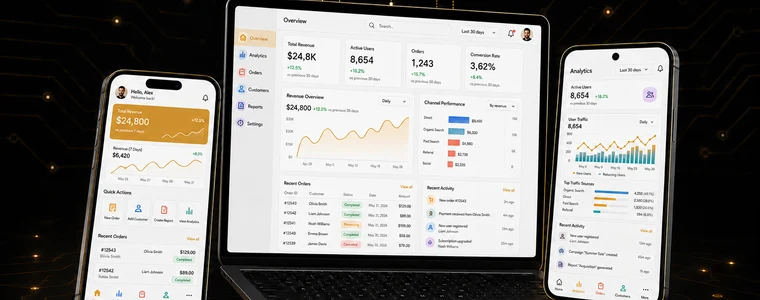
Bespoke platforms integrated into an operator's existing systems.

Campaigns and sales content for multi-stakeholder buying committees.

Press and executive visibility for large, multi-market operators.

Billboards and physical placements coordinated across countries.
Process
We map the government, supply-chain or energy process end-to-end before proposing what to automate.
AI agents, software and systems integration built against the actual operational constraints, not a demo environment.
Campaigns, sales enablement, PR and OOH launched on one coordinated calendar, not run as separate efforts.
The same playbook extended market by market as operations expand into new countries.
Case studies
A government process automation and an energy-sector reporting system, each pairing the build with the launch that followed it.
A government body needed a manual, paper-heavy approval process automated without disrupting live operations. Building the AI automation and the software integration together — rather than as separate workstreams — got the process live and cut manual processing time significantly, with no disruption to the department's existing systems.
A crude-oil operator's field reporting ran on manual logs that took days to reach head office. Building a software platform that captured field data directly and integrated it into existing operational systems turned a multi-day reporting lag into a same-day view — plus the PR and stakeholder communications program that came with the launch.
Why Corum8
AI automation, software integration, marketing, sales and PR run by one team — not four vendors that don't talk to each other.
Public-sector procurement and energy-sector operational constraints shape how we scope and deliver, not an afterthought.
Automation built to run against your actual operational systems, not a proof-of-concept that never ships.
Marketing, PR and OOH delivered in the markets where your stakeholders actually are.
10+ years and 1,100+ projects — enterprise delivery discipline, not startup improvisation.
The team that builds the integration also runs the campaign launching it, so nothing gets lost in a handoff.
What drives scope
Cost is driven by process complexity, integration scope and market count.
A single workflow automation is lighter than a multi-department process spanning several legacy systems.
A standalone tool is simpler than integrating with an operator's existing legacy infrastructure.
A single-country rollout is one scope. Marketing and PR coordinated across 10+ countries is materially more.
A direct engagement is lighter than a formal government procurement process with multi-round evaluation.
Automating one process differs from a multi-process automation program across an entire operation.
A single market's PR push is lighter than coordinated OOH and offline campaigns run across multiple regions at once.
FAQ
Corum8 builds AI automation for operational processes, develops and integrates the software behind those operations, and runs the marketing, sales enablement, PR and OOH campaigns that reach the stakeholders who matter. The work spans from automating a single manual workflow to a coordinated multi-country marketing and PR rollout, for government bodies, supply-chain operators and crude-oil and energy companies.
Yes — AI process automation for public-sector operations, built around the procurement requirements government bodies actually work under, is a core part of the practice. That includes manual approval workflows, paper-heavy processes and cross-department handoffs that slow operations down.
Yes — field-operations, logistics and reporting systems for crude-oil and energy operators are part of our enterprise practice. The common pattern is replacing manual field logs and delayed reporting with a live system integrated into existing operational infrastructure.
Cost is driven by process complexity, integration scope, market count, public-sector procurement complexity, automation ambition and offline campaign scale. A single-workflow automation for one department is a different budget than a multi-process program coordinated across several countries.
Yes — the same team scopes the software integration and the marketing, sales enablement and PR launch, so the two move on one calendar instead of two disconnected timelines. That coordination is usually the difference between a rollout that lands cleanly and one that stalls on handoffs.
Vendor coordination, inventory reconciliation, logistics reporting and approval workflows are the processes we most often automate. These tend to be high-volume, rules-based and currently running through email or spreadsheets — exactly the profile that automates cleanly without a multi-year rebuild.
Yes — billboards, airport takeovers and physical placements coordinated across multiple countries are part of the enterprise practice. Global operators typically need offline presence timed to match wherever their stakeholders and partners actually are, not just their headquarters market.
Start with a process that is stable, high-volume and currently done by hand. Those three together are the pattern that pays back quickest, because the work is repetitive enough to model and frequent enough that the saving compounds. Processes still changing shape every quarter are better automated once they settle, and we will say so rather than building something that needs rewriting. The usual first candidates are recurring reporting, document intake and internal request routing — unglamorous, and consistently the ones that free the most time.