

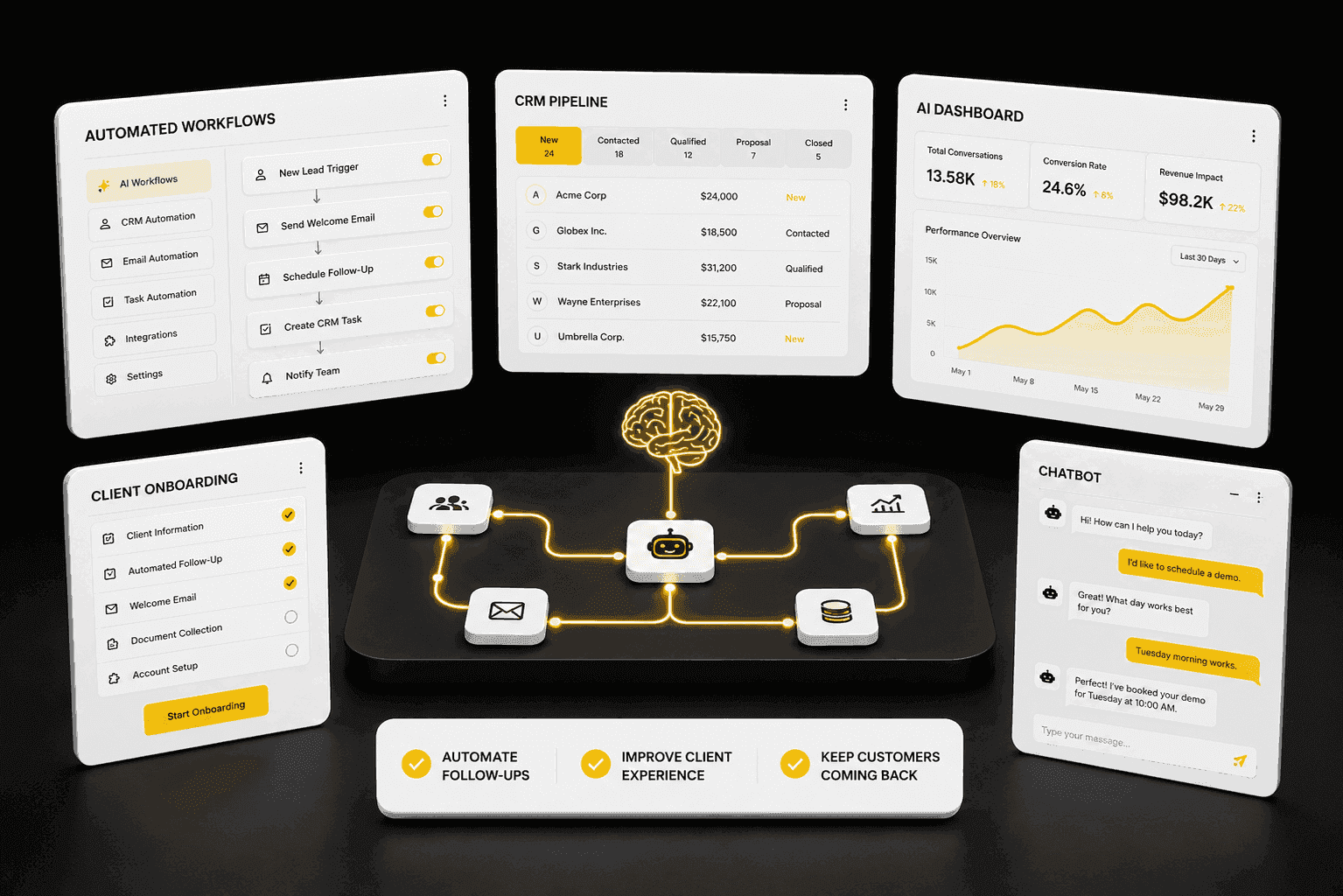
Workflow design & mapping
The actual process gets mapped, bottleneck by bottleneck, before any automation gets built around it.
Development · Automation
Workflow automation built around the actual bottleneck, not a generic template. RPA and integration engineering that removes the repetitive task someone's doing by hand every week.
Corum8 builds workflow automation, RPA and integration systems that remove manual, repetitive operational work — recurring reporting, support triage, data pipelines and back-office processes that currently require someone doing the same task by hand every week. 1,100+ projects delivered since 2016, engineered around the specific bottleneck, not a generic no-code template.
What's included
The actual process gets mapped, bottleneck by bottleneck, before any automation gets built around it.
Robotic process automation for the legacy systems and manual data-entry work that has no clean API.
Tools that don't talk to each other, made to talk to each other, without a human copying data between tabs.
Purpose-built internal apps for the specific workflow, not a generic dashboard nobody actually uses.
The reports your team produces on a schedule, generated automatically, with a complete record of what each run read and when.
The right person gets notified about the right thing, instead of everyone getting everything or nobody getting anything.
Data moved and transformed on schedule, with monitoring that catches a broken pipeline before the report is wrong.
Automated workflows that fail loudly and recoverably, not silently and invisibly until someone notices weeks later.
Is this you?
You don't need all of them. One is usually enough to justify the call.
A repetitive task is eating real hours from someone on your team, every single week, with no end in sight.
A recurring report gets built by copying numbers between spreadsheets instead of pulling from a live pipeline.
Data gets re-entered manually between systems that should be integrated but aren't.
Someone assembles the same report by hand every month, and a transcription mistake is only ever caught downstream.
A large share of support volume is the same handful of questions that could be triaged automatically.
Operational volume is growing faster than you can hire to keep up with it manually.
Sectors
The workflow differs, the reliability discipline doesn't.

End-to-end automation for the operational processes eating the most manual hours.
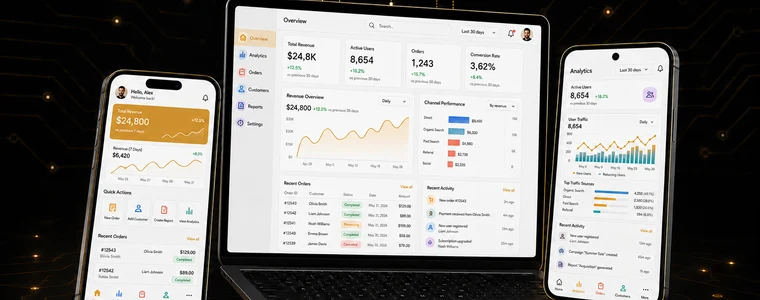
Robotic automation for legacy systems with no clean API to integrate against.

Systems connected so data moves without manual re-entry.

Scheduled reports generated with a complete record of every run.
Ticket triage and response automation for repetitive support volume.

Scheduled, monitored data movement that catches failures before reports go out wrong.

Deployment and release automation that removes manual release-day risk.

On-chain event triggers and automated response for crypto-native operations.
Process
The actual manual process gets documented step by step, so the automation targets the real bottleneck.
The workflow and any needed API integrations engineered against the mapped process, not a generic template.
What happens when a step fails, a value is missing, or an upstream system changes — tested before go-live.
Automated workflows ship with monitoring and alerting live, so failures get caught immediately, not weeks later.
Case studies
An ops team's manual-hours reduction and a support-triage system for the most repetitive ticket volume.
An operations team spent multiple days each week manually reconciling data between a payment processor and internal accounting records. Automating the reconciliation pipeline, with exception flagging for genuine mismatches, cut the process from days of manual work to a few hours of exception review.
A consumer platform's support team was manually triaging a high volume of tickets, a large share of which were the same handful of recurring questions. Automated triage and response for the repetitive category freed the support team to focus on the tickets that actually needed human judgment.
Why Corum8
The bottleneck gets documented and understood before any automation gets built around it.
Error handling and monitoring are part of the build, not an afterthought discovered during the first outage.
Automated processes that touch sensitive data record what they read, what they changed and when, so nothing the system did has to be reconstructed later.
Workflow automation, API integration and internal tooling under one roof, not three separate vendors.
1,100+ projects and 10+ years building systems that keep running after the initial build, not just at demo time.
Automation built with cost and resource controls from day one, not discovered as a surprise invoice.
What drives scope
Cost is driven by workflow complexity, integration count and how much has to be recorded.
A single linear process is lightest. Multi-branch workflows with conditional logic are materially heavier.
Automating within one system is simple. Connecting five systems with different APIs multiplies integration work.
Internal-only automation is lighter than automation touching sensitive data, where every run has to be recorded and recoverable.
Basic retry logic is baseline. Comprehensive failure handling across every edge case is a bigger build.
Automating a low-volume weekly task differs from automating a high-throughput real-time process.
Deterministic rules-based automation is more predictable to build and audit than AI-assisted decision automation.
FAQ
Business automation is the engineering of workflow, RPA and integration systems that remove manual, repetitive operational work — the recurring report, the data re-entry between tools, the support ticket triage someone does by hand every day. The discipline centers on mapping the actual workflow and its failure modes before building, not applying a generic no-code template to every process.
Cost is driven by workflow complexity, integration count, record-keeping depth, error-handling rigor, scale and volume, and whether the automation is rules-based or AI-assisted. A single-system workflow automation is a different budget than a five-system integration where every run has to be recorded.
RPA fits when a legacy system has no clean API to integrate against and the only path is automating the user interface directly; API integration is preferred whenever a real API exists, since it's more reliable and easier to maintain. Most serious automation builds use API integration wherever possible and RPA only where it's genuinely the only option.
Yes — scheduled reporting with a full audit trail is a core practice area, removing the manual-transcription error risk that comes with hand-compiled reports. The record of each run is built in from the start, because when someone questions a figure months later, the useful answer is what the system read and when — not a regenerated report that happens to match.
Workflow mapping and bottleneck analysis, automation and integration engineering, error handling and edge-case testing, monitoring and alerting, and documentation for your team to maintain the system after delivery. Ongoing process changes as your business evolves are typically a separate, smaller engagement.
Through monitoring and alerting built in from the start — automated workflows are engineered to fail loudly and recoverably, with a human notified immediately, rather than failing silently until someone notices the downstream damage weeks later. Silent failure is one of the most common and costly automation mistakes we see in existing systems.
Yes — for tasks that genuinely benefit from judgment beyond fixed rules, we integrate AI-assisted automation, coordinated with our dedicated AI and automation practice for anything requiring evaluation harnesses and model routing. Most operational automation is better served by deterministic rules-based logic where possible, since it's easier to audit and predict.
The ones that are stable, repetitive and happening often. Those pay back fastest because the logic holds still long enough to model and the saving repeats every week. Recurring reporting, ticket triage, data reconciliation and internal request routing are the usual first wins. Where a process is still changing shape month to month, we will often suggest automating the stable parts around it first and returning to the rest once it settles — which gets you most of the benefit without building something that needs rewriting.