

Intent mapping & keyword research
The full spectrum of questions your buyer asks — informational, comparison, cost and solution queries — not just high-volume short-tail phrases.
Marketing · SEO, AEO & GEO
Deep page-cluster architectures built to be cited, not just crawled. Rank in Google, get quoted by ChatGPT and Perplexity, get cited by Gemini — one program, one team.
Corum8 runs SEO, AEO and GEO programs for Web3, AI and fintech companies — SEO for Google, AEO for AI answer engines like ChatGPT and Perplexity, and GEO for citation in Gemini and AI Overviews. All three share one underlying discipline: publish genuinely authoritative, entity-dense content structured the way AI parsers and Google both prefer.
What's included
The full spectrum of questions your buyer asks — informational, comparison, cost and solution queries — not just high-volume short-tail phrases.
Crawl health, rendering, Core Web Vitals, schema coverage and internal linking — fixed before content investment starts paying off.
Interlinked pillar and cluster pages that tell Google and AI engines the semantic relationships between your content — 260-page builds when the vertical demands it.
Direct-answer blocks, FAQ schema, entity density and fact density — content written to be quoted, not just indexed.
Comprehensive schema per page type, validated against schema.org and Google's rich-results tester — some of the highest-leverage technical work in 2026 SEO.
Digital PR, original data-driven content and tool-led content that earns links signaling real authority — not PBN echoes.
Tracking which AI engines cite your content, for which queries, in which contexts — then closing the gaps.
Organic traffic, keyword-cluster coverage and AI-citation rate, reported in writing rather than as ranking screenshots.
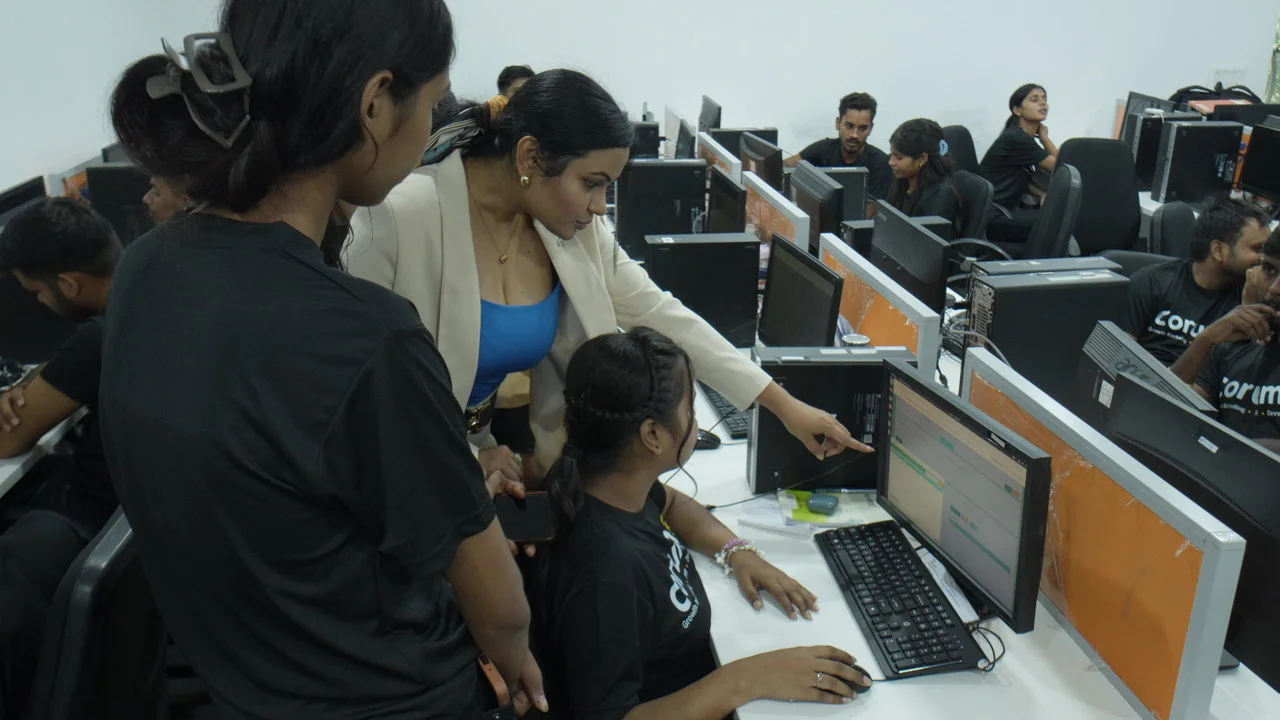
How the work actually runs
Most of the SEO budget a team burns on writing gets wasted if the site underneath it can't be crawled, rendered and understood cleanly. We start with the audit — Core Web Vitals, rendering, schema coverage, internal linking — because content built on a broken technical base never earns the ranking or the AI citation it should. That's also why the work sits with the same team writing the pages: the person deciding pillar-cluster architecture needs to see the crawl data, not read it in a handoff doc three weeks later.
Is this you?
You don't need all of them. One is usually enough to justify the call.
Organic has been declining since — a Google Core Update or the AI-search shift is likely responsible.
They rank for your target terms in Google, and they get quoted in ChatGPT and Perplexity for the same queries.
You're launching in a category where the research happens in ChatGPT or Perplexity before anyone reaches your site.
The blogs don't rank, don't get quoted, and don't earn links — and nobody's sure why.
A 30-page site is competing against 300-page competitor sites in a vertical where depth signals authority.
You're seeing AI Overviews in Google SERPs for your target queries, and your brand isn't cited in them.
Sectors
Depth, structure, entity density, genuine expertise.

260-page architectures for verticals where competitors run deep.

Technical content that ranks without sacrificing accuracy.

Category-defining content in the fastest-moving SERP of all.

Content that survives Helpful Content updates because it's actually helpful.

Trust-heavy content built around named standards and real technical detail.

AEO programs targeting the AI answer engines buyers actually ask first.

GEO work tuned for Gemini's citation preferences specifically.

Launch-window content built to rank before the news cycle moves on.
Process
What's indexed, what ranks, what's cited today — the baseline that defines priorities.
Intent and entity mapping across the full buyer journey, not just short-tail keywords.
Technical fixes, pillar-cluster content and schema, shipped on a weekly cadence.
Digital PR and AI-citation monitoring compound the results over quarters, not weeks.
Case studies
A Helpful Content hit that needed content pruning and rebuilding, and a thin site competing in a deep vertical that needed real cluster depth.
A B2B analytics SaaS had 18 months of declining organic after two Google Core Updates hit 180 pages of thin, keyword-targeted content. We pruned roughly 40% of existing pages, rebuilt 60 as genuinely authoritative cluster content with full schema, and ran a data-driven-content program that earned inbound links on its own.
A global crypto exchange was running 25 pages against competitors at 200-300. We built a 260-page pillar-cluster architecture over eight months — full schema, authored use cases, real internal-link depth — and picked up citations in Perplexity and ChatGPT for category queries the brand had never ranked for in Google.
Why Corum8
Through Penguin, Panda, Hummingbird, RankBrain, BERT, Helpful Content and now the AI-search era — the discipline was shaped by watching what survived every shift.
Keyword research, content, technical engineering, schema, link earning and AI-citation optimization under one roof, not five vendors.
AI-citation work has been live for clients since 2023 — before most agencies had a name for it.
Pruning ~40% of a client's existing content is sometimes the highest-leverage move in the whole engagement.
PR earns the links SEO can't buy; community creates the engagement signals Google weighs. Search works better integrated.
Zero Google manual actions across our builds — link earning that survives spam-link cleanups because it was never spammy.
AEO & GEO tactics
Ranking in Google and getting cited by an LLM reward similar things, but the citation step needs its own tactics.
40-60 word summaries at the top of every page, written as the complete answer an AI engine can lift verbatim.
Structured markup that matches real query language, so answer engines can map your content to the question being asked.
Named blockchains, tools and standards woven through body copy — the associations AI models map to a knowledge graph.
Profound, AthenaHQ and Otterly track brand presence in ChatGPT, Perplexity, Gemini and Claude answers, query by query.
Earned coverage from sites AI engines already trust compounds faster than any on-page tactic alone.
Direct query testing across ChatGPT, Perplexity, Gemini and Claude — verifying what the monitoring tools report against what's actually happening.
FAQ
SEO optimizes for Google rankings; AEO optimizes for being quoted by AI answer engines like ChatGPT and Perplexity; GEO is the closely related discipline of getting cited specifically in generative AI answers, including Google's AI Overviews. In 2026 these three have converged — the tactics that win Google rankings (depth, structure, entity density, schema) also win AI citations, so we run them as one integrated program.
Cost is driven by content scale, technical-debt remediation, competitive intensity, geographic coverage and speed expectations. A program building 60+ new pages, fixing a full technical backlog, earning links in a competitive vertical and monitoring AI citations is a different scope than doing one of those activities alone. We scope against the actual diagnosis.
SEO moves on its own schedule, and the honest answer is that it depends on where you are starting. Technical fixes tend to surface first because they remove things actively holding the site back. Content programs take longer, because they have to be written, indexed and then earn their position. AI-citation improvements can move faster when the content base is already strong. What we will not do is put a date on it — anyone promising you a specific week is selling thin tactics or paid traffic labelled as SEO.
Unedited AI content is a problem; AI-assisted content with expert review, fact-checking and original insight is fine and often the practical way to produce content at scale. Google's Helpful Content updates target low-effort AI output specifically — articles that just regurgitate what's already on the web. The test is quality, not whether AI touched the draft.
A search-state audit, keyword and intent mapping, technical remediation, content strategy and production, schema implementation, link earning through digital PR, AI-citation monitoring, and transparent measurement. Paid search and CMS migration sit outside the core scope — we coordinate on the former and can support the latter, but they're typically separate work.
Yes — we work with most CMSes, including WordPress, Webflow, Shopify, Sanity, Contentful, custom Next.js or Astro builds, and Framer, and rarely require platform migration. Migration only becomes necessary when server-side rendering is impossible on the current stack or indexation is broken at the platform level — the exception, not the rule.
Through organic traffic, AI-citation rates and share-of-voice in target keyword clusters — not ranking screenshots or DR-score increases. Those are the things the work actually moves, so those are the things we report. You get a written review each cycle covering what changed, what it did and what we would do next. What that traffic is worth to your business is yours to measure — we do not claim it and we do not report on it.
By publishing content that's structurally quotable — a direct-answer block up top, entity-dense body copy, FAQ schema, and specific numbers an AI model can lift with confidence — and backing it with earned citations from sites those models already trust. Generic, thinly-sourced content rarely gets pulled into an AI answer regardless of how well it ranks in Google.
Yes — English-only is the lightest scope; adding EU multi-language, LatAm Spanish, MENA Arabic or APAC regional coverage requires language-specific content and in-market search-behavior research, which we scope as part of the program. Geographic coverage is one of the main drivers of program cost.
Check whether your buyers research before they buy — and in most categories they do. Where people compare options, read documentation or ask an AI assistant before talking to sales, search and answer-engine work compound for years. We start by mapping the questions your buyers actually ask, so the investment goes behind demand that already exists rather than terms nobody searches. Where the audience genuinely does not research that way, we will say so and point the budget at the channels that reach them.