

Growth-loop design
Referral and virality mechanics engineered as a system — where one user's action produces the next user, not a one-off campaign.
Marketing · Web3 Growth
Growth built as one connected system, not five channels hoping to add up. Acquisition, activation, retention and virality loops engineered to compound — outpacing the industry average for teams running channels in silos.
Corum8 runs full-funnel growth marketing for Web3 products — the acquisition, activation, retention and virality mechanics that turn separate channels into one compounding system. Where PR, influencer and community work are channel-specific, growth marketing ties them together against a single funnel and a single attribution model, backed by a 25,000-creator network.
What's included
Referral and virality mechanics engineered as a system — where one user's action produces the next user, not a one-off campaign.
Paid, organic and community work planned together as one program rather than separate budgets.
The gap between 'signed up' and 'actually used the product' closed with the same rigor as the acquisition funnel.
Email, push and on-chain touchpoints sequenced to bring users back, not just a single welcome message.
Quests, points systems and on-chain engagement loops designed around real usage.
One dashboard that shows which channel actually drove the user who stuck around, not just who clicked first.
Community treated as a growth channel with measurable output, not just a Discord server that exists.
PR, influencer, paid and community activated around the same moment instead of scattered across the calendar.
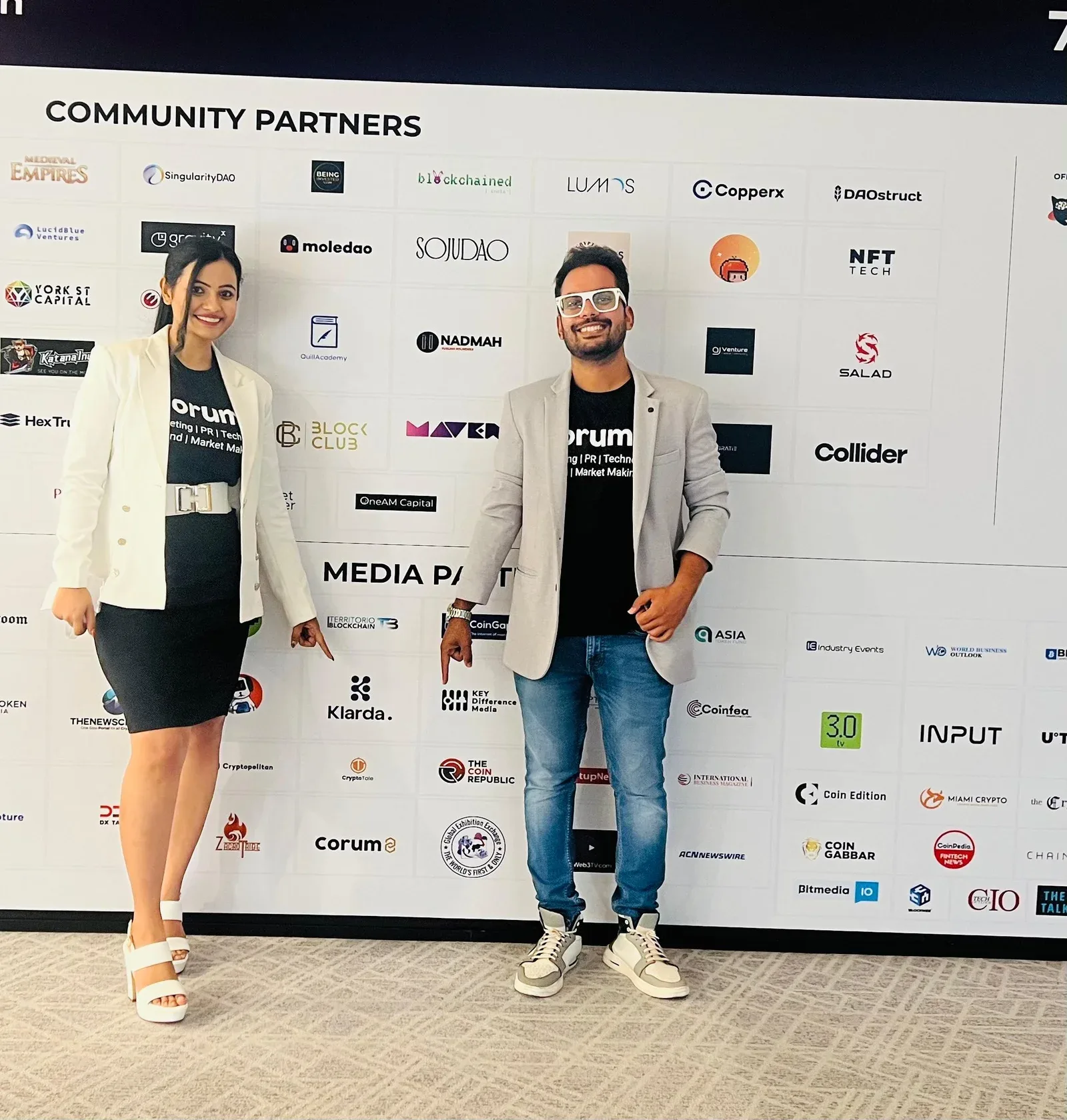
Growth shows up in the room, too
A coordinated growth push isn't only a spreadsheet of scheduled posts — it's PR, influencer activation and community all pointed at the same launch moment, including the live events where a community actually gathers. When a project has a booth, a stage slot or a media wall at an industry event, that moment gets folded into the same campaign calendar as the digital push, not treated as a separate marketing line item.
Is this you?
You don't need all of them. One is usually enough to justify the call.
PR, influencer, paid and community all run separately and nobody can say how they compound together.
Your Discord or Telegram is large, but it isn't translating into actual product usage.
There's no cross-channel attribution, so budget decisions are guesses dressed up as strategy.
The first month looked great. The months since have flattened out with no clear reason why.
Rivals with similar products are growing meaningfully faster and it isn't budget — it's system design.
The team understands growth marketing in principle but hasn't run it against crypto-native user behavior before.
Sectors
The loop mechanics differ, the systems discipline doesn't.

TVL-and-retention loops that don't rely purely on mercenary yield.

User-acquisition funnels tied to trading-volume outcomes, not just signups.

Growth loops that carry a token launch past its first-week attention spike.

Activation funnels engineered around the specific moment a wallet becomes daily-use.

Community-led virality loops native to how gaming and NFT audiences actually share.

Growth programs bridging a crypto-native funnel with a mainstream-finance audience.

Developer-acquisition loops for L0/L1/L2 and infrastructure products.
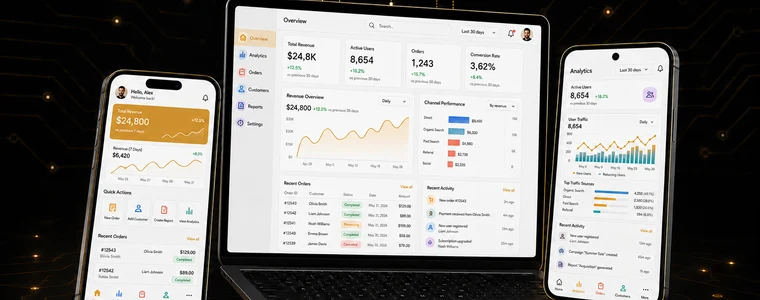
Self-serve signup-to-active-user funnels, adapted for a crypto-native audience.
Process
Where users actually drop off, and which channels are truly driving retained users.
Acquisition, activation and retention mechanics built as one connected system against the audit.
PR, influencer, paid and community activated together around the same moment, not scattered across weeks.
Every subsequent decision runs against the cross-channel dashboard, not a gut call.
Case studies
A DeFi retention loop that reduced dependence on mercenary liquidity, and a token-launch growth campaign that carried attention past the first-week TGE spike.
A DeFi protocol had strong initial TVL that drained the moment yield incentives dropped. Building a retention loop around governance participation and fee-sharing, instead of pure yield, kept a materially higher share of depositors through subsequent incentive-schedule reductions.
A token project's launch-week attention was strong but historically fell off a cliff by week three. A coordinated cross-channel campaign with a built-in community referral loop kept engagement and holder activity materially above the typical post-TGE drop-off pattern.
Why Corum8
PR, influencer, community, paid and content all report to the same growth funnel instead of five separate budgets.
A cross-channel dashboard that shows which channel drove the user who stuck around, not just who clicked first.
On-chain quests, referral loops and community-led virality built for how crypto-native users actually behave.
Influencer activation that plugs directly into the growth loop, not a separate campaign running on its own timeline.
A track record of compounding growth meaningfully faster than typical benchmarks across our client base.
10+ years of crypto-native growth work, not general growth-marketing principles applied to crypto for the first time.
What drives scope
Cost is driven by channel breadth, funnel complexity and attribution depth.
A two-channel program is lighter than a five-channel program requiring cross-channel orchestration and attribution.
Off-chain referral loops are simpler to build than on-chain quest and points systems requiring smart-contract work.
Growing an existing community is different work than seeding one from zero alongside the growth program.
Single-touch attribution is light. Multi-touch attribution across paid, organic, community and on-chain events is heavier.
A basic lifecycle-email sequence is one scope. A full retention program with on-chain and off-chain touchpoints is more.
Managing a modest paid budget is lighter than orchestrating a large multi-platform paid program alongside organic loops.
FAQ
Web3 growth marketing is the discipline of designing acquisition, activation, retention and virality as one connected system for a crypto-native product, rather than running PR, influencer, community and paid as separate disconnected channels. The goal is a funnel that compounds — where growth in one channel feeds growth in the next — measured against real product usage.
Performance marketing and PR are channels; growth marketing is the system that ties channels together against one funnel and one attribution model. A team can run excellent PR and excellent paid ads independently and still have a growth problem if neither is designed to feed retention or virality. Growth marketing is the layer that connects the channels to actual compounding outcomes.
Cost is driven by channel mix breadth, whether the mechanics are on-chain or off-chain, community stage, attribution complexity, retention program depth and paid budget scale. A two-channel referral program is a different budget than a five-channel system with on-chain quests and multi-touch attribution.
Yes — this is one of the most common growth problems we see, and it's usually a design problem, not an effort problem. A large Discord or Telegram that isn't converting typically lacks a clear path from community engagement to actual product action. Rebuilding that path is core growth-marketing work.
A funnel audit, growth-loop design across acquisition and retention, on-chain or off-chain mechanic design where relevant, cross-channel campaign orchestration, and an attribution dashboard tying channels to real outcomes. Channel-specific execution — PR placements, influencer contracts, ad management — draws on our dedicated channel teams but is coordinated against the same funnel.
Yes — quest systems, points programs and on-chain engagement loops are part of the practice, designed around real usage signals. On-chain mechanics carry real engineering scope beyond off-chain referral programs, since they typically require smart-contract work.
Through cross-channel attribution tied to retained users and real product usage, not impressions or follower counts in isolation. The dashboard shows which channel actually produced the user who came back, which is a fundamentally different (and more useful) signal than which channel produced the most clicks.
Look for people who already found you and stayed. When a product has early users returning without being prompted, acquisition spend multiplies something that already works. Where retention is still being figured out, we would rather put the first phase of the budget into the surfaces that fix it — onboarding, positioning, the landing experience — then scale hard once it holds. That sequencing consistently produces better numbers than scaling early, and we will tell you which phase we think you are in.