
Most crypto projects run marketing as a set of parallel line items. Community over here, PR over there, creators booked separately, paid media switched on because the round closed.
Each one produces something. Together they produce considerably less than they should, because nothing is set up to reinforce anything else.
What each channel actually does
Being precise about this prevents most of the wasted spend in the category.
Community is where attention lands and where it is either kept or lost. It answers questions faster than support, absorbs panic during a bad hour, and produces the people who explain your project to others. It is the slowest to build and the most expensive to rebuild once it has gone quiet.
Content and search reach people researching before they buy, which in 2026 increasingly means asking an AI assistant rather than scrolling results. Content compounds — a good explainer keeps working for years — and it is the only channel where the work you did last quarter still performs this quarter.
PR is third-party confirmation. It is not reach. What coverage does is give a cautious person, an exchange listing team or an investor something to find that does not depend on taking your word for it.
Creator partnerships buy access to specific communities that already trust someone. The value is in the trust, which is why picking on audience fit rather than follower count matters so much.
Paid acquisition multiplies whatever your product already does. It is an amplifier, and it amplifies a leaky funnel just as efficiently as a good one.
The sequence that works
Start with community and content, early — before there is anything to announce.
Both take months and neither compresses. A project that begins building an audience six weeks before a launch date will not have one. The launches that look effortless were preceded by a quiet period nobody saw.
Add PR when there is something checkable. A shipped product, a named partner who will confirm it, an independent review, a real number from production. Press attached to manufactured milestones is transparent to exactly the readers you want.
Concentrate creator work around dated moments. Creator activity spread thinly across a quiet quarter does much less than the same budget compressed into a window where something is actually happening.
Scale paid once retention holds. When people who arrive are still there a month later, spend multiplies something real.
The compounding effect
Run to one calendar, these stop being four costs and start reinforcing each other.
Press gives creators something verifiable to point at. Creators drive people into a community that is already staffed. The community answers the questions coverage always generates — the questions a quiet channel simply drops. Content catches everyone who searched the project name afterwards, and paid retargets the ones who looked but did not act.
Run separately, each is a line item. Run together against real dates, they compound. That is the entire argument for keeping them under one roof, and it is the biggest difference between launches that build something and launches that produce a spike.
Matching the mix to the buyer
An institutional RWA platform and a consumer wallet need almost opposite channel mixes.
Institutional buyers research, read trade press, ask peers and move through a committee. That argues for content depth, targeted press, founder visibility and account-based work rather than consumer reach.
Consumer crypto products live on X, Telegram, creators and app-store discovery, where speed and volume matter more than depth.
Running the wrong mix well still produces nothing, which is why the audience question comes before the channel question every time.
What to expect from an agency
Defined scope up front. Pricing against that scope and your actual spend, not a flat monthly fee and not a percentage of media budget — a percentage rewards spending more rather than spending well.
Honest reporting in writing on what ran and how each channel performed, so the next cycle is planned on evidence rather than instinct.
And no promised return figure. We do not quote one before a campaign, during one, or after one. What we commit to is the work, the reporting, and adjusting against what performs.
Who we are
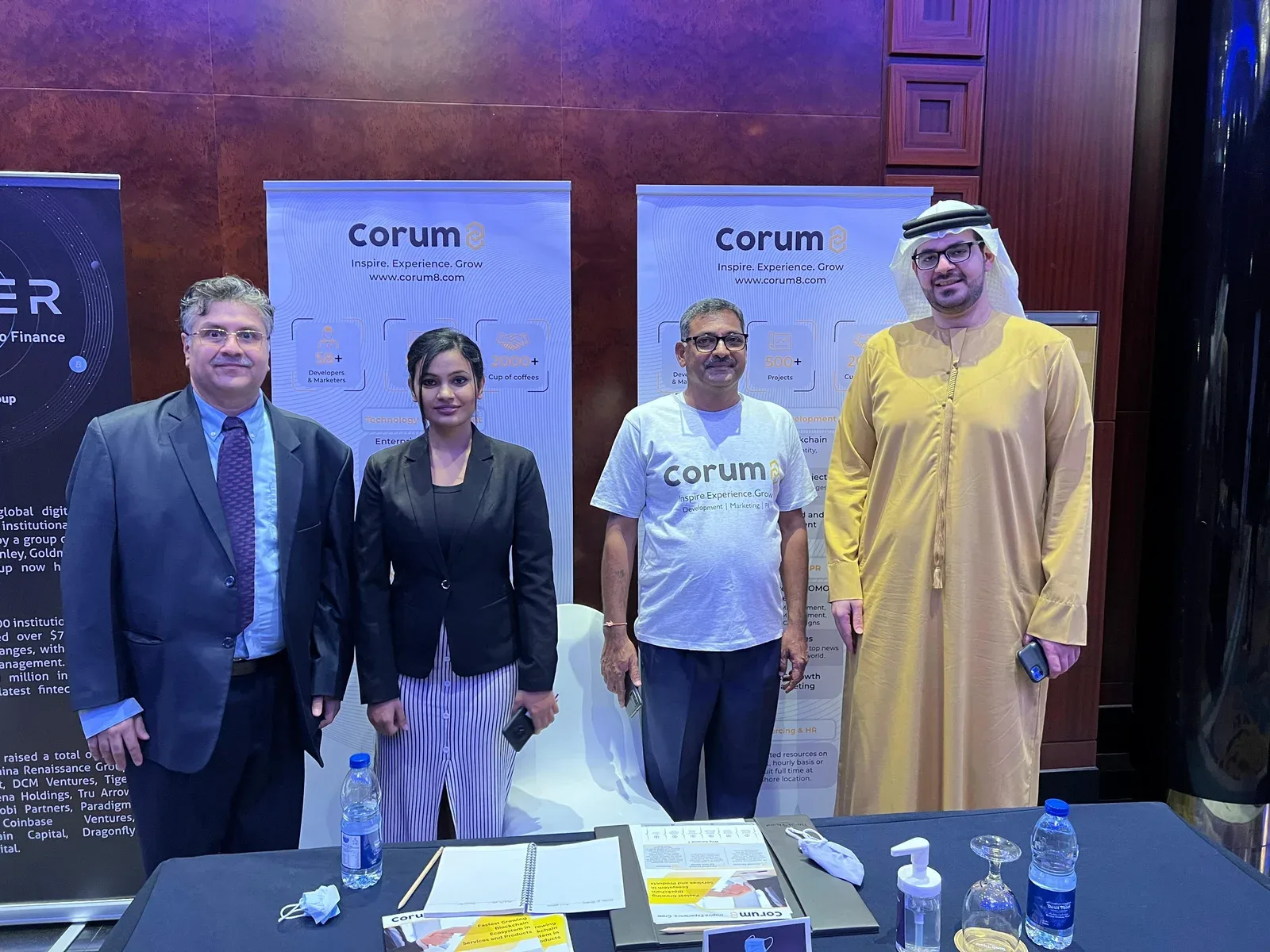
Corum8 has run crypto marketing since 2016, through two full market cycles — 1,100+ projects, 95+ specialists across community, PR, creators, performance, content and design, with an engineering team building exchanges, wallets, tokens and RWA platforms in the same building.
Common questions
How do you market a crypto project?
Sequence the channels rather than running them in parallel as separate line items. Community and content come first because they are where attention lands. PR attaches to checkable milestones and gives outsiders something to verify. Creator work concentrates around dated moments. Paid acquisition scales what is already converting. Projects that start all four simultaneously spend the most and learn the least, because nothing has had time to tell them what is working.
Which marketing channels work best for crypto projects?
X and Telegram for crypto-native audiences, Discord where you need structure, earned press for third-party credibility, creator partnerships for reach into specific communities, and search and answer-engine work for the people researching before they buy. Which combination is right depends on who your buyer is - an institutional product and a consumer app need almost opposite mixes, and running the wrong one well still produces nothing.
When should a crypto project start marketing?
Before there is anything to announce. Community and founder visibility take months to establish and cannot be compressed when a launch date arrives. The projects that look effortless at launch spent the preceding period building an audience quietly. What can wait is paid acquisition, which multiplies whatever your product already does and works best once people who arrive are visibly staying.
How much should a crypto project spend on marketing?
It depends on whether you are establishing an audience or scaling one that already exists. Early on, most of the value comes from work that costs time rather than media budget - community, content, founder visibility, press relationships. Paid spend earns its place once you have evidence that people who arrive actually stay, because it amplifies whatever your funnel already does.
Can a crypto marketing agency guarantee results?
No, and an agency promising a specific return before seeing your product, funnel and spend history is quoting a sales figure rather than a forecast. What a serious agency commits to is defined scope, work delivered against it, honest reporting on what ran and how each channel performed, and adjusting against what the data shows. Corum8 does not promise a return figure before, during or after a campaign, and does not take a percentage of media spend.