
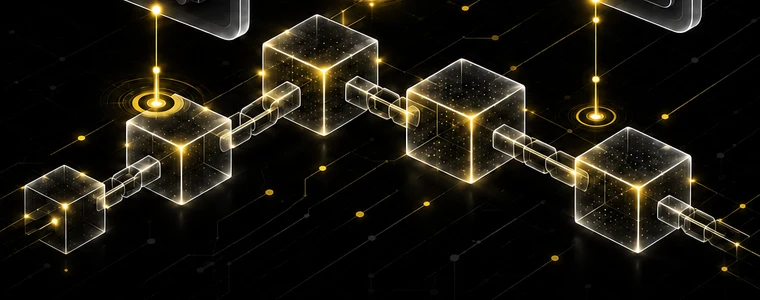
Launching your own chain is a far bigger commitment than deploying a contract. You are taking on infrastructure that has to stay up, stay secure and stay maintained indefinitely.
Worth being clear-eyed about whether you need it.
When it earns its place
Your own chain makes sense when the differentiator lives at the protocol layer:
- Custom fee economics — paying gas in your own token, or subsidising it entirely.
- A named validator set, where participants must be known.
- A specific privacy model an open network cannot provide.
- Throughput or block times no existing network delivers.
Where an established L2 already does what you need, deploying there puts you in front of users immediately, with existing liquidity, tooling and wallets. The honest test is whether your users would notice the difference.
Optimistic or ZK
Optimistic rollups assume transactions are valid and open a challenge window where anyone can prove fraud. Mature tooling, straightforward EVM equivalence, and slow withdrawals because the window has to elapse.
ZK rollups prove validity cryptographically when the batch is submitted. Fast finality and withdrawals, at the cost of proving infrastructure that is heavier to run and harder to build for.
The gap has closed considerably. Most new work is going ZK, and for a chain launching now that is usually the right direction unless you need EVM equivalence that a particular stack does not yet offer.
Data availability decides your cost
This is the choice that determines what a transaction costs your users, and it is not primarily a technical decision.
Posting to the parent chain is the most secure option and the most expensive. Anyone can reconstruct your state from public data.
A data availability committee is cheaper and introduces a trust assumption — you are relying on that committee to publish honestly.
A dedicated DA layer sits between the two on both cost and trust.
Pick deliberately, and say publicly which you chose. Users evaluating your chain will ask.
Be honest about the sequencer
Almost every rollup launches with a single sequencer run by the team. It orders transactions and produces blocks.
That is a centralisation point. It can censor. It can reorder for advantage. Everyone in this space knows it, which is why claiming decentralisation you do not have is worse than stating the position plainly.
Decentralising the sequencer is a genuine engineering programme — shared sequencing, proposer rotation, economic guarantees. Put it on the roadmap as work, not as something already done.
Bridges are where value is lost
More has been lost to bridge exploits than to any other category in this space.
Your bridge holds the assets backing everything on your chain. It deserves disproportionate attention: minimal code, formal verification on the settlement path, multiple independent audits, monitored withdrawal limits, and a pause mechanism someone can actually reach.
The unglamorous half
A chain is not finished at launch. It needs:
- A block explorer, because without one nobody can verify anything.
- RPC infrastructure that stays available under load.
- A developer SDK and documentation good enough that someone can build without talking to you.
- Monitoring and alerting across sequencer health, proof submission and bridge balances.
- An upgrade process with a published timelock.
This is most of the ongoing cost and it gets scoped last by nearly everyone.
Before mainnet
Two independent third-party audits on the bridge and settlement contracts, with remediation and re-review. Formal verification where a bug is unrecoverable. A bug bounty live before value arrives.
We coordinate those firms. We do not audit our own code.
Common questions
Should a project build its own Layer 2?
Your own chain earns its place when the thing making you different lives at the protocol layer - custom fee economics, a named validator set, a specific privacy model, or throughput an existing network cannot give you. Where deploying on an established L2 serves the product, that gets you to users far sooner and keeps the option to migrate. The honest test is whether users would notice the difference.
What is the difference between optimistic and ZK rollups?
Optimistic rollups assume transactions are valid and allow a challenge window in which anyone can prove otherwise, which makes withdrawals slow but the tooling mature and EVM-equivalent. ZK rollups prove validity cryptographically at submission, so withdrawals finalise quickly, at the cost of heavier proving infrastructure. The gap has narrowed considerably, and ZK is where most new work is going.
What does a sequencer do?
It orders transactions and produces blocks before they are settled to the parent chain. Almost every rollup launches with a single sequencer run by the team, which is a centralisation point worth being honest about publicly - it can censor and it can reorder. Decentralising it is a real engineering programme, not a configuration change, and should be on the roadmap rather than implied to already exist.
What is data availability and why does it matter?
It is the guarantee that the data needed to reconstruct your chain state is published somewhere anyone can read. Posting to the parent chain is the most secure and the most expensive; alternatives like a data availability committee or a dedicated DA layer cost less and carry different trust assumptions. This choice is the single biggest driver of your per-transaction cost.
Does Corum8 build Layer 2 networks?
Yes - rollup deployment and customisation, sequencer infrastructure, bridge contracts, block explorers, developer SDKs and the monitoring underneath. We coordinate independent third-party audits before mainnet.