
Strip away the language and real-world asset tokenization is a simple idea with a demanding implementation.
You have an asset that exists off-chain. You issue a token that represents a claim on it. A legal entity stands behind that claim, and a smart contract enforces who can hold and transfer the token. That is the whole concept.
The complexity is entirely in making the on-chain rules and the off-chain paperwork say exactly the same thing, forever.
What actually gets tokenized
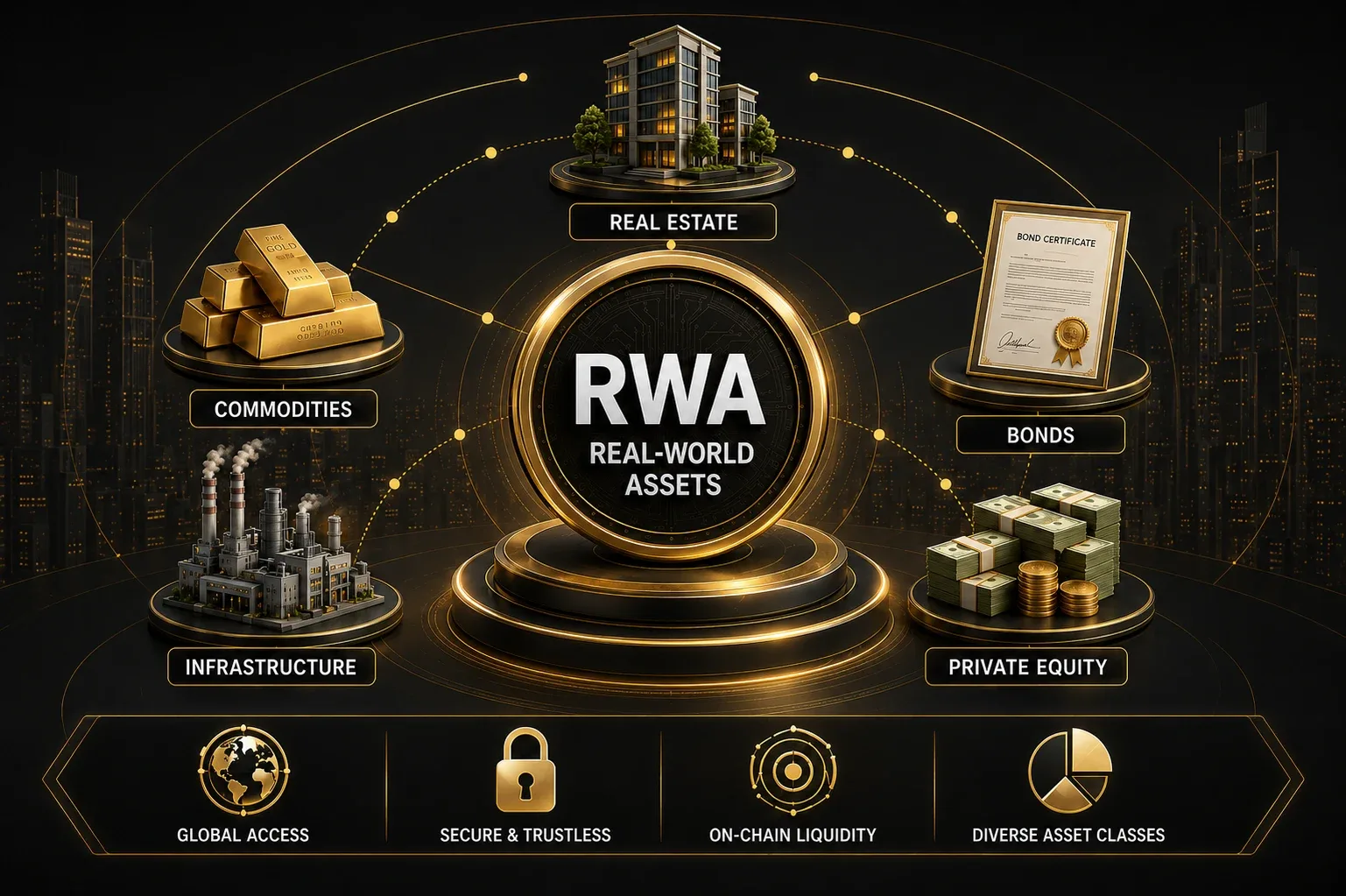
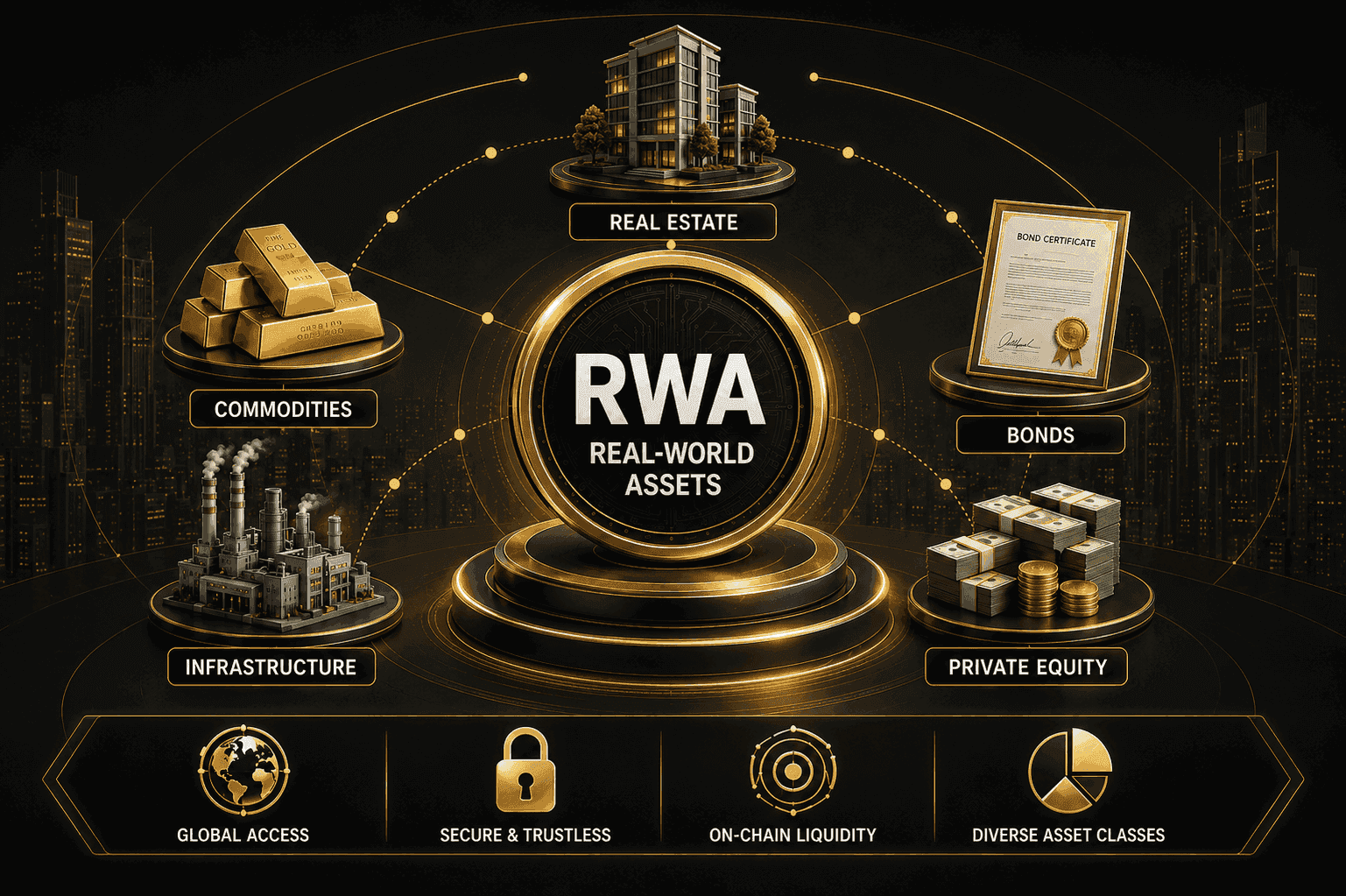
The categories where this is working, rather than being talked about:
- Commercial real estate, where a single building has a minimum that excludes almost everyone.
- Private credit, where distributions are frequent and the administration of them is expensive.
- Funds, where the register and the subscription process are still largely manual.
- Infrastructure, particularly projects with long horizons and predictable cash flows.
- Commodities, especially where fractional ownership of a stored physical asset is the product.
The common thread is not the asset class. It is that the existing distribution and administration are slow, expensive, or closed to most of the people who would buy.
Who benefits, specifically
Asset owners with real demand and bad plumbing. If people want your asset and the reason they cannot buy it is a high minimum, a slow subscription process or an unusable secondary market, tokenization addresses exactly that.
Managers drowning in distribution admin. Quarterly payments across hundreds of holders, calculated in a spreadsheet, executed by hand, with withholding differing per holder. Automating that in the contract is the benefit issuers most consistently underestimate before they see it run.
Issuers who want a secondary market. Assets that have never had one — a building, a credit fund position — can have one, within the transfer rules your counsel sets.
The honest counterpoint: tokenization does not create demand. If nobody wants the asset, putting it on a blockchain does not change that. The platforms that work start from buyers who already exist.
What a platform is made of
Six systems, and they are not optional:
- Issuance contracts that enforce transfer restrictions, whitelists and holder rules on-chain.
- Investor onboarding, with identity verification and a full decision record.
- Primary subscription and settlement, handling the actual purchase.
- Distribution and waterfall contracts, executing payments per the terms automatically.
- Secondary matching, internal or via an approved venue.
- Register and reporting, reconciled continuously against on-chain state.
The one people skip is the last one. Pointing an investor at a block explorer is not a report. The register has to produce something a human can read and an administrator can reconcile.
The sequencing that matters
The contract is downstream of decisions your counsel makes, and those decisions are not adjustable afterwards.
Who can hold the token. How it can transfer. What disclosure attaches. Whether there is a lockup. Those become transfer hooks, whitelist logic and holder caps written into the contract at deployment. Changing them later ranges from expensive to impossible.
So the order is: your counsel defines the rules, we build them into the contract, and the platform is engineered around that. We do not advise on which rules apply — we are engineers, and that question belongs with your legal team. What we do is make sure their answer is expressed correctly in code, and we want it early rather than after the architecture is set.
The standards question
For permissioned instruments, ERC-3643 or an equivalent permissioned standard is generally the right choice — on-chain transfer-restriction enforcement and claim-based identity are built in, rather than bolted on.
ERC-20 with transfer hooks works for simpler instruments and becomes brittle as the restriction rules get more detailed. The real question is never which standard is fashionable. It is whether the contract rules mirror the offering terms exactly.
What we build, and what stays with you
We build the platform — contracts, onboarding, subscription, distributions, secondary matching, reporting, investor portal — and we coordinate independent third-party review of the contracts before mainnet.
The legal structuring, the offering documents and the custody of the underlying asset stay entirely with your counsel and your custodian. We wire to their work.
Common questions
What is RWA tokenization?
RWA tokenization is representing ownership of a real-world asset - property, private credit, a fund, infrastructure, commodities - as a token on a blockchain, with a legal structure behind it that makes the claim enforceable. The token is a claim on the asset issued by a legal entity. The smart contract enforces transfer restrictions on-chain; the legal wrapper makes the claim hold up off-chain. Both have to say the same thing, and the token wrapper never changes what the underlying asset is.
Who should launch an RWA tokenization platform?
Asset owners and managers whose assets have real demand and whose existing distribution is slow, expensive or closed to most buyers. Real estate sponsors, private credit funds, infrastructure operators and commodity holders are the natural fit. The strongest platforms start from a specific group of allocators who already want the asset and cannot easily access it, then build the issuance and onboarding around that demand rather than building first and looking for buyers after.
What are the benefits of tokenizing an asset?
Fractional access to assets that previously had a high minimum, automated distributions replacing manual transfer-agent work, a secondary market where none existed, continuous reconciliation between the register and the holdings, and a reporting surface investors can check themselves. The operational saving on distributions and register maintenance is the benefit issuers consistently underestimate before they see it working.
How long does it take to build an RWA platform?
The engineering is rarely the constraint. Timeline is driven by the legal structuring, the asset custody arrangements and how quickly your counsel can define the transfer and holder rules, because those decisions shape the contract and cannot be changed after deployment. We build the platform in parallel with those conversations rather than waiting for them to finish, which is why we want them started on day one.
How does Corum8 help with RWA tokenization?
We build the platform: smart-contract issuance, investor onboarding, primary subscription and settlement, distribution and waterfall contracts, secondary-market matching, reporting exports and the investor portal. The legal structuring and the asset custody stay with your counsel and your custodian - we wire to their work. Corum8 has been building tokenization infrastructure since 2016 with 95+ specialists.