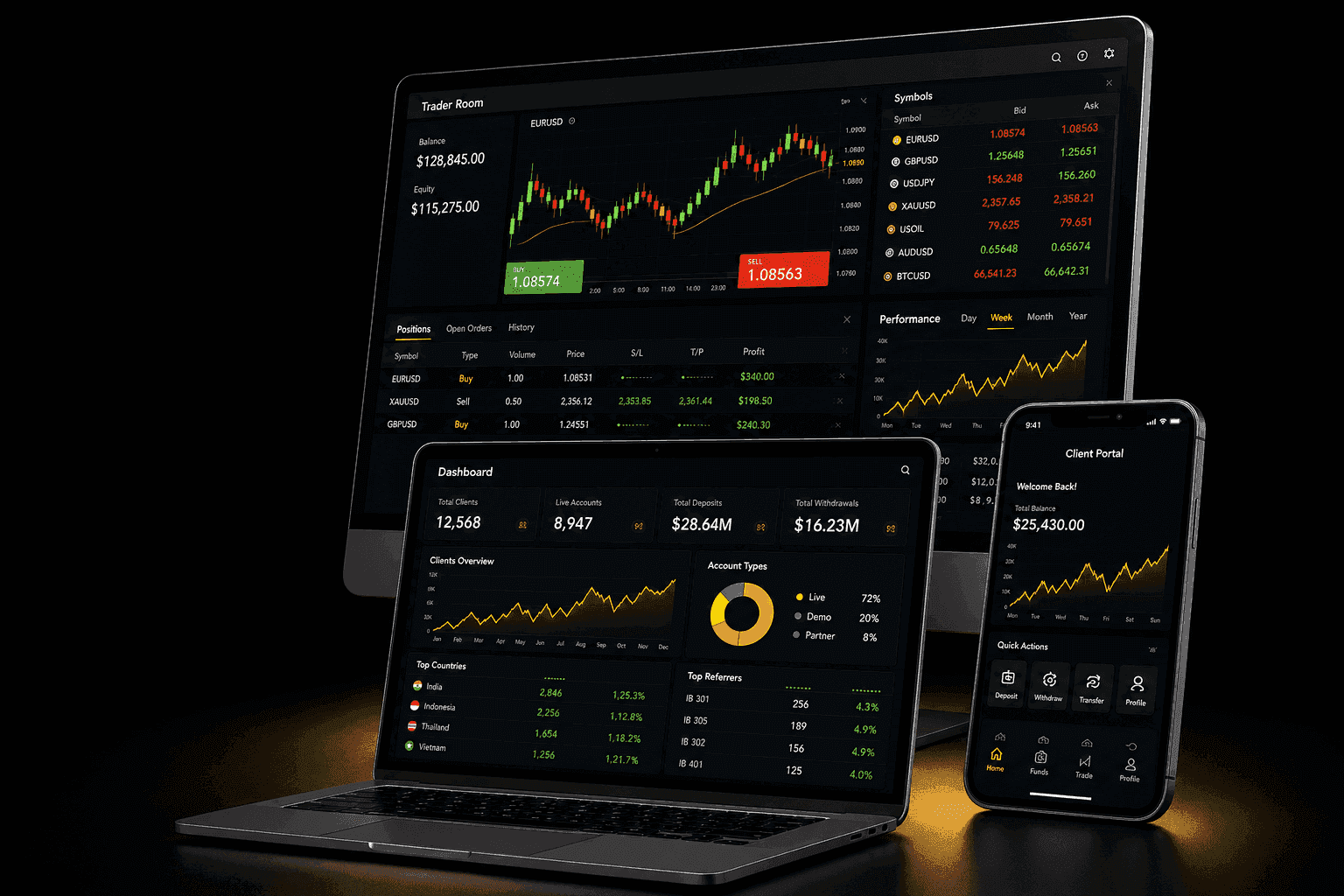


White-label exchange platforms look excellent in a demo. Order book, charts, wallet, admin panel, all working, all branded. It’s a genuinely impressive twenty minutes.
Then you take it to production and find out which parts you can actually change.
An exchange without liquidity is a landing page. That’s the sentence worth keeping from this whole piece, because the build decision matters far less than founders think and the liquidity decision matters far more.
The question that decides it
Where does the thing that makes you worth using actually live?
If your edge is regional — you’re the exchange with the best local fiat rails in a specific market, or the one with a licence competitors don’t have, or the one with a brand people in that country trust — then the trading engine is a commodity to you. Buy it. Spend your time and money on the licence, the banking relationships and the liquidity.
If your edge is in the product itself — unusual instruments, specific matching behaviour, a settlement model nobody supports, deep integration with a platform you already run — then you’re going to hit the walls of a vendor platform, and you’ll hit them at the worst possible moment. Build it.
Most teams know the answer to this. They just haven’t asked the question in those words.
Where white-label gets uncomfortable
It’s rarely the core trading. It’s the edges:
- Reporting workflows. Someone wants a specific report in a specific format, and the vendor’s roadmap decides when you get it.
- Fiat rails. Local payment providers, settlement timing, reconciliation. Vendors support what they support.
- Fee logic. Maker-taker schedules, VIP tiers, referral structures, regional pricing. Frequently more rigid than you’d expect.
- Data access. Getting your own trade and user data out in a usable form, for analytics or for a future migration.
- Incident response. When something goes wrong at 2am, you file a ticket. That’s the deal you signed.
None of these kill you individually. Together they determine whether you can run the business the way you intended.
Where custom gets uncomfortable
It costs more, it takes longer, and you own everything forever.
Matching engine performance under real load is harder than it looks, and the difference between something that works in testing and something that holds up during a volatile hour is significant engineering.
Security is now your problem, permanently. Not a launch checkbox — a standing function with people attached.
Ongoing maintenance never stops. New chains, new tokens, new requirements, new attack patterns.
The honest version: custom is right when it’s genuinely required. Choosing it for prestige is an expensive way to end up with a worse version of something you could have bought.
The three things that actually decide success
Liquidity. First. Before everything. A trader lands on your exchange, looks at the spread on the pair they care about, and decides in four seconds. If the book is thin, nothing else you built matters. You need a market making relationship, a plan for depth on the pairs you’re launching, and realistic expectations about what it costs to maintain.
Permissions. Whatever your counsel tells you applies where you intend to operate. This isn’t a workstream you add near launch — it shapes the entity structure, the technology and the markets you can serve from day one. Trying to retrofit those requirements onto a built platform is one of the most expensive mistakes in this category.
Custody. Self-custody with proper HSM infrastructure, an MPC provider, or a qualified custodian. This decision drives your insurance position, your regulatory obligations, your withdrawal architecture and your worst-case scenario. It’s the one place where buying proven infrastructure from a specialist beats building, nearly every time.
What we look at in a build assessment
- Which markets you serve and what each one requires legally.
- Which instruments — spot only, margin, perpetuals, derivatives — because each adds a layer of regulatory and engineering complexity.
- Fiat or crypto-only, since fiat rails bring banking relationships and a different compliance load.
- Expected volume profile, which determines whether matching engine performance is a real constraint or a talking point.
- Custody model and who carries the risk.
- Whether you have an existing user base to migrate, which changes everything about launch sequencing.
- Internal engineering capacity, because a custom platform you can’t maintain is worse than a vendor platform you can.
If you go white-label, negotiate these
Ask what data you get on exit, and in what format. Ask what the SLA actually commits to and what the remedy is when it’s missed. Ask which parts of the compliance module you can configure yourself versus which require a vendor release. Ask how many other clients are running the same version, and what happens when one of them needs a change that conflicts with yours.
Plan the migration path on the day you sign, not on the day you need it.
The summary
Buy the parts where you have no edge. Build the parts where you do. Spend the money you saved on liquidity and licensing, because those are what decide whether anyone trades.
And be honest with yourself about which category your differentiation is in. The exchanges that struggle are rarely the ones that picked the wrong technology. They’re the ones that launched with a beautiful interface, an empty order book, and an unresolved question about which regulator they answer to.
Common questions
Should you build a crypto exchange white-label or custom?
Choose white-label when your differentiation is regional or brand-led and the trading experience itself is standard. Choose custom when the product itself is the differentiator — unusual instruments, specific matching behaviour, deep integration with something you already run, or controls no vendor supports. The question is not which is better. It is whether the thing that makes you worth using lives in the parts a vendor lets you change.
What actually decides whether an exchange succeeds?
Liquidity, permissions and custody — in roughly that order. An exchange without order book depth is a landing page with a chart on it, because the first thing a serious trader does is check the spread. Technology matters, but it is rarely the reason an exchange fails. Most failures trace back to launching with no liquidity plan, no market making relationship, and an unclear position on where they are allowed to operate.
When should you sort out permissions?
Before the architecture, not before the launch. What you need depends entirely on where you operate and who you serve, and your counsel is the only one who can tell you — but whatever the answer is, it shapes the corporate structure, the technology and the go-to-market from the beginning. Custody, fiat on-ramps and derivatives each add their own requirements on top. Teams that treat this as a workstream to slot in near launch end up rebuilding parts of the platform.
How important is custody architecture?
It is the decision with the least room for error. Whether you self-custody with an HSM setup, use an MPC provider, or run a qualified custodian determines your insurance position, your obligations, your withdrawal flow and your worst-case scenario. This is the one area where buying proven infrastructure from a specialist is almost always the right call over building it yourself.
Can you migrate from white-label to custom later?
Yes, and plenty of exchanges have. It is a real project rather than a switch — user data, balances, order history, onboarding records and integrations all have to move without interrupting trading. Plan the exit at the point you sign the vendor contract. Ask what data you get on exit and in what format, because the answer to that question is worth more than most of the feature list.