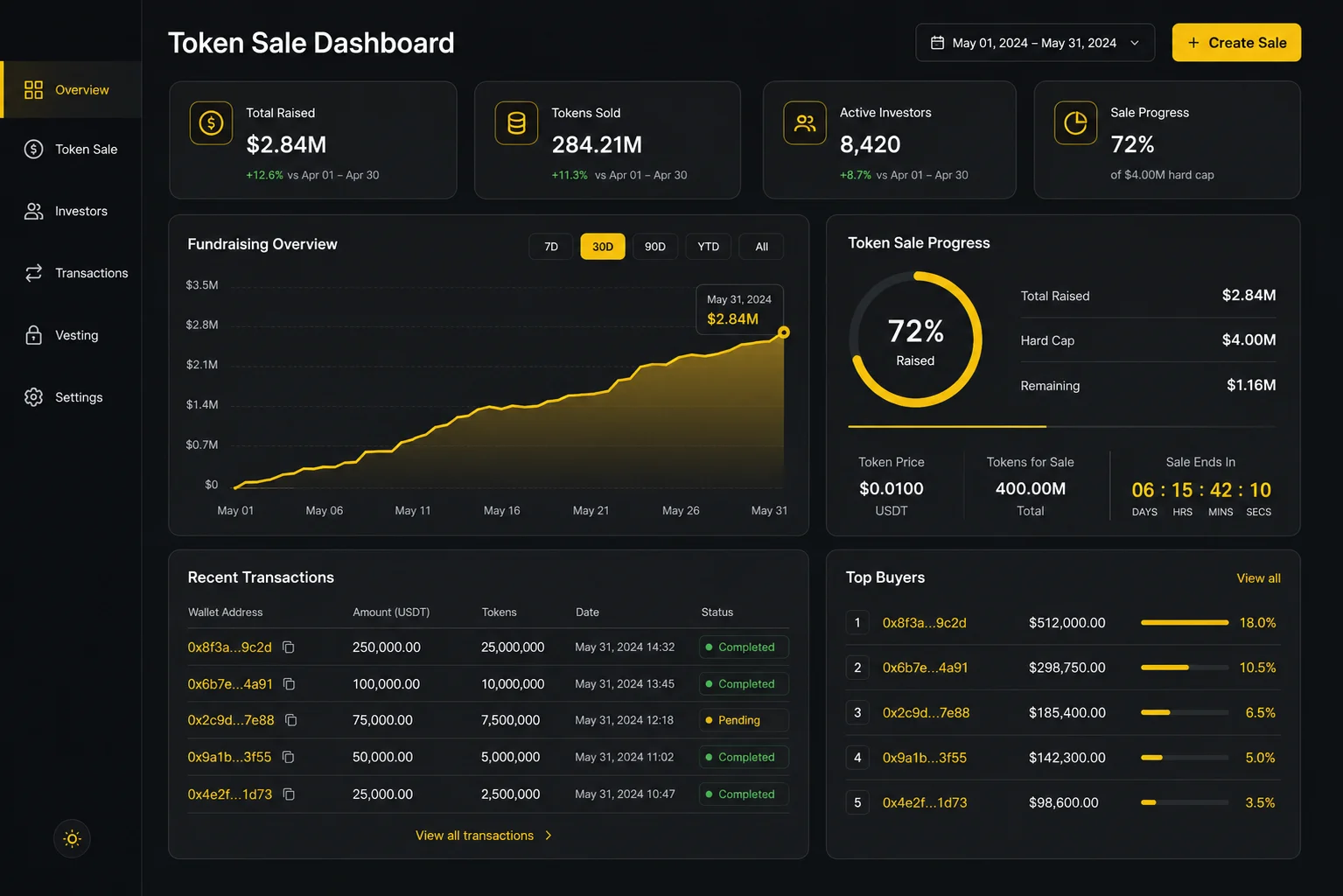


A presale doesn’t create demand. It converts it.
That single sentence explains most presale outcomes. If you arrive at the window with a community that already believes, private conversations already had, and a product people have already touched, the presale is a conversion event. If you arrive with a landing page and a countdown, the campaign is trying to manufacture conviction in three weeks, and it usually can’t.
What you should have banked before the window opens
A community that predates the token. Not a large one. A real one. People who found you because the product was interesting, before there was anything to buy. This group does more for a presale than any paid channel, because they’re the ones who answer the questions in the chat when you’re asleep.
Something to touch. A testnet, a beta, a live contract, a working demo. Buyers in 2026 are far more product-literate than in previous cycles, and the ones you want are the ones who check.
Private commitment. Real allocations from real parties. It gives press a fact, it changes the arithmetic on the public window, and it changes how everyone else reads the round.
Documentation that survives scrutiny. Tokenomics, vesting, use of funds, and answers to the questions you’d rather not be asked. Someone will ask them in public. Better to have the answer written.
Settled legal structure. Where you can sell, where you can’t, and geofencing that’s built rather than promised.
The terms decide who buys
This is underrated. The structure of your presale selects your buyer base.
Heavy discount plus no vesting attracts people who intend to sell at listing. That’s not cynicism — it’s the rational response to the terms you set. If the entire pitch is that the price goes up later, you’ve advertised for flippers and you’ll get them.
Vesting the presale allocation, publishing that vesting on-chain, and building the campaign around what the product does attracts a different group. Smaller, slower to fill, and materially better for what happens after.
You largely choose your holders through your terms. Choose deliberately.
What to publish before you open
- Price and allocation. Exact.
- Vesting schedule, including cliffs, and where it’s enforced.
- Hard cap and soft cap.
- Use of funds, broken down specifically enough that a reader can judge whether the raise is proportionate to the plan.
- Which jurisdictions are excluded, clearly, before someone spends an hour on KYC to be rejected.
- What happens if the soft cap isn’t met.
Publishing these shortens diligence conversations dramatically. Serious buyers are looking for exactly this list, and the projects that make them ask look like projects with something to hide.
Running the window
Concentrate the campaign. Press, creator activation and community pushes inside the window, tied to real milestones — opening, cap progress, closing. Spread thin, the campaign reads as background noise.
Staff support properly. Presale windows generate a volume of urgent questions that surprises first-time teams. Wallet issues, KYC rejections, network confusion. Slow support during a sale converts directly into lost allocation and public complaints.
Publish progress honestly. If the round is filling slowly, saying so is better than silence. Communities notice silence and fill it with worse explanations than the truth.
Have the close ready. What happens the hour after the window shuts — confirmation, next steps, timeline framing, and what the community should expect next.
The mistakes
Opening with nothing banked. Covered above, and it’s the big one.
Changing terms mid-window. Even improvements read as instability. Lock it.
Overpromising the listing. Any suggestion of a guaranteed price outcome is both a legal problem and a trust problem, and it will be quoted back to you.
Ignoring the day after. A presale that fills and then goes quiet loses the buyers it just acquired. The post-close communication plan is part of the presale, not a separate project.
Treating regions as one market. A presale marketed identically in India, Turkey, Vietnam and the Gulf underperforms in all four. Local community leads and local-language material aren’t a nice extra here.
What drives cost and complexity
- Jurisdictions in scope and the structuring each needs.
- Whether KYC is required, and at what depth, which changes both cost and conversion.
- Number of languages and regional communities you’re running.
- Product maturity, since a team with something live spends far less on narrative construction.
- Whether you’re running independently or through a launchpad, which shifts work and economics between you and a partner.
- Support staffing across the window, which is a real operational cost people forget to budget.
The honest summary
Spend your effort on the months before the window. Community, product proof, private conversations, documentation. By the time the presale opens, the result is mostly determined.
The campaign during the window is real work and it matters at the margin. But it’s amplification. If there’s nothing to amplify, the budget just makes the silence louder.
Common questions
How far ahead should presale marketing start?
Well before the window opens, because the presale converts demand rather than creating it. The build-up phase — community, content, private conversations, product proof — is the part that determines the outcome. How long that takes depends on your starting audience, your product maturity and how many regions you are targeting. What does not vary is the order: build first, then open.
What makes people buy in a presale?
Belief that the thing being built will exist and matter, plus a reason the presale price is better than waiting. Both halves are required. Discount alone attracts flippers who sell on day one. Belief alone means people wait for the listing. The projects that fill presales cleanly have a real product story and terms a buyer can defend to themselves.
Should presale terms be public?
Yes. Price, allocation, vesting, hard cap and use of funds should all be published before the window opens. Buyers who discover terms afterwards behave like people who were misled, because functionally they were. Public terms also shorten your diligence conversations enormously, since serious buyers are checking these first anyway.
How do you avoid attracting only flippers?
Vest the presale allocation, publish that vesting on-chain, and market to people interested in the product rather than the discount. Campaigns built entirely on price expectation deliver buyers who behave exactly as advertised. You cannot fully prevent it, but the composition of your buyer base is largely determined by what you promised to attract them.
What should you publish about use of funds?
A specific breakdown across engineering, liquidity, operations, marketing and reserve, with enough granularity that a reader can judge whether the raise size is proportionate to the plan. Vague allocations invite the assumption that most of it is going somewhere the team would rather not describe. Specificity here is one of the cheapest trust signals available.